Red Dress Day is a national day of remembrance and activism honouring the lives of Missing and Murdered Indigenous Women, Girls and Two-Spirited People (MMIWG2S+).
Observed annually on May 5, it raises awareness to the thousands of Indigenous women, girls and two-spirit people who have been subject to disproportionate violence in Canada.
Participants wear red dresses or ribbons, draping red dresses in public spaces and painting red hands on faces to commemorate lives lost and advocate for justice.
History of Red Dress Day
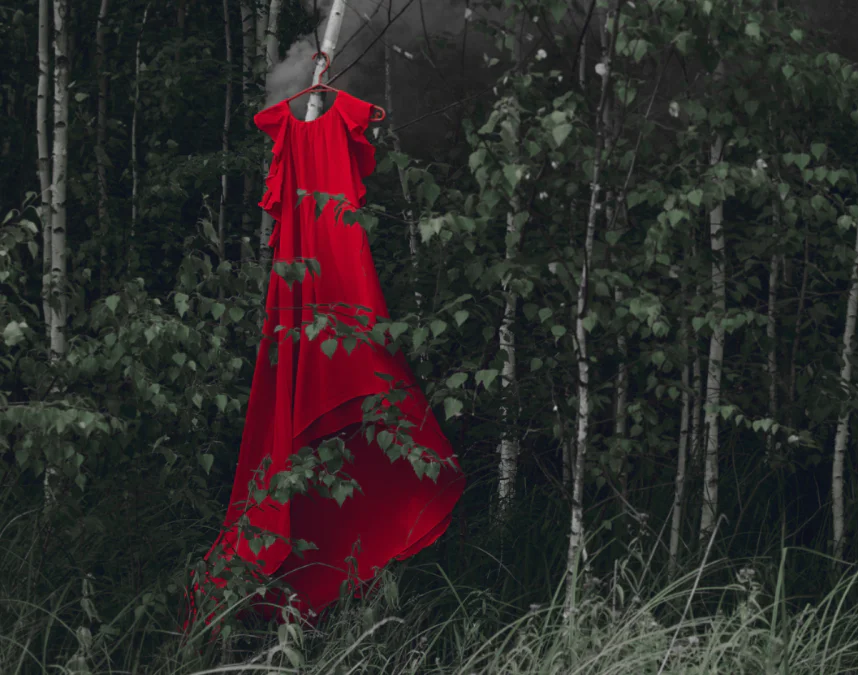
Red Dress Day was initiated in 2010 by Métis artist Jaime Black through the art installation, “REDress Project,” where she used empty red dresses as a visual representation of the missing and murdered Indigenous women across Canada. The project sparked international conversations about violence against Indigenous women and has become a day of global solidarity, reinforcing the Calls to Justice from the 2019 National Inquiry into MMIWG2S+.
Connection with the Truth and Reconciliation Commission (TRC) Calls to Action
Red Dress Day aligns with the TRC Calls to Action #39 and #41, which state:
- 39: We call upon the federal government to develop a national plan to collect and publish data on the criminal victimization of Aboriginal people, including data related to homicide and family violence victimization.
- 41: We call upon the federal government, in consultation with Aboriginal organizations, to appoint a public inquiry into the causes of, and remedies for, the disproportionate victimization of Aboriginal women and girls. The inquiry’s mandate would include: i. Investigation into missing and murdered Aboriginal women and girls. ii. Links to the intergenerational legacy of residential schools.
The MMIWG Report was the result of more than two years of gathering testimonies from family members of missing and murdered women, survivors, elders, Knowledge Keepers, front-line workers and experts. The final report was released in June 2019 and included 231 Calls for Justice to address the disproportionate violence faced by Indigenous women and girls.
Importance of the Day
Red Dress Day is crucial for bringing on-going awareness to the disproportionate violence suffered by Indigenous women, girls, two-spirited and gender diverse people and emphasize the ongoing fight for justice. The sight of red dresses in public spaces highlights the alarming rates of violence against Indigenous women, which have been labeled a human rights crisis and a national shame.
Key statistics:
- Indigenous women and girls constitute less than 5% of the Canadian population but represent approximately 24% of all homicide victims, making them 12 times more likely to be murdered.
- 56% of Indigenous women report experiencing intimate partner violence, more than double the rate for non-Indigenous individuals.
- Indigenous women make up 41.4% of the federally incarcerated female population, despite being just over 4% of the female population.
How to Participate in Red Dress Day
- Wear red on May 5 to show solidarity
- Listen to and amplify the voices of survivors and families, with their consent
- Write to elected officials advocating for the implementation of the 231 Calls for Justice
- Attend local vigils, walks and events
- Donate to Indigenous-led organizations and support land defenders
- Educate yourself and your community about MMIWG2S+ issues
MMIWG2S+ Resources & Reading
Podcasts
- The Truth Sharing Podcasts: The Truth Sharing Podcasts is a project inspired by the National Inquiry into Missing and Murdered Indigenous Women and Girls, that gives life to the truth and creates a living legacy of commemoration. This series of podcasts visited five Canadian communities to seek out and give voice to those who have experienced loss, examine the ways in which those affected are trying to heal, and shine a light on those trying to bring about positive change.
- Taken the Podcast: a moving and emotional 10-part series that honours the stories and tries to uncover the truths behind Canada’s unresolved cases of MMIWG2S+
- She’s Gone: The disappearance and death of Dorothy Ann Woods, parts 1 and 2
Resources
- Reclaiming Power and Place – MMIWG2S+ Final Report volume 1a | volume 1b
- KAIROS Canada – Missing and Murdered Indigenous Women and Girls InfoHub
- Aboriginal Alert is a resource that shares information about missing individuals in Canada. The organization works with other groups to provide resources and support for individuals who are in need and are seeking help.
- Crisis Line: 1 (844) 413-6649