U.S. Supreme Court strikes down emergency tariffs: What Learning Resources, Inc. v. Trump means for Canada



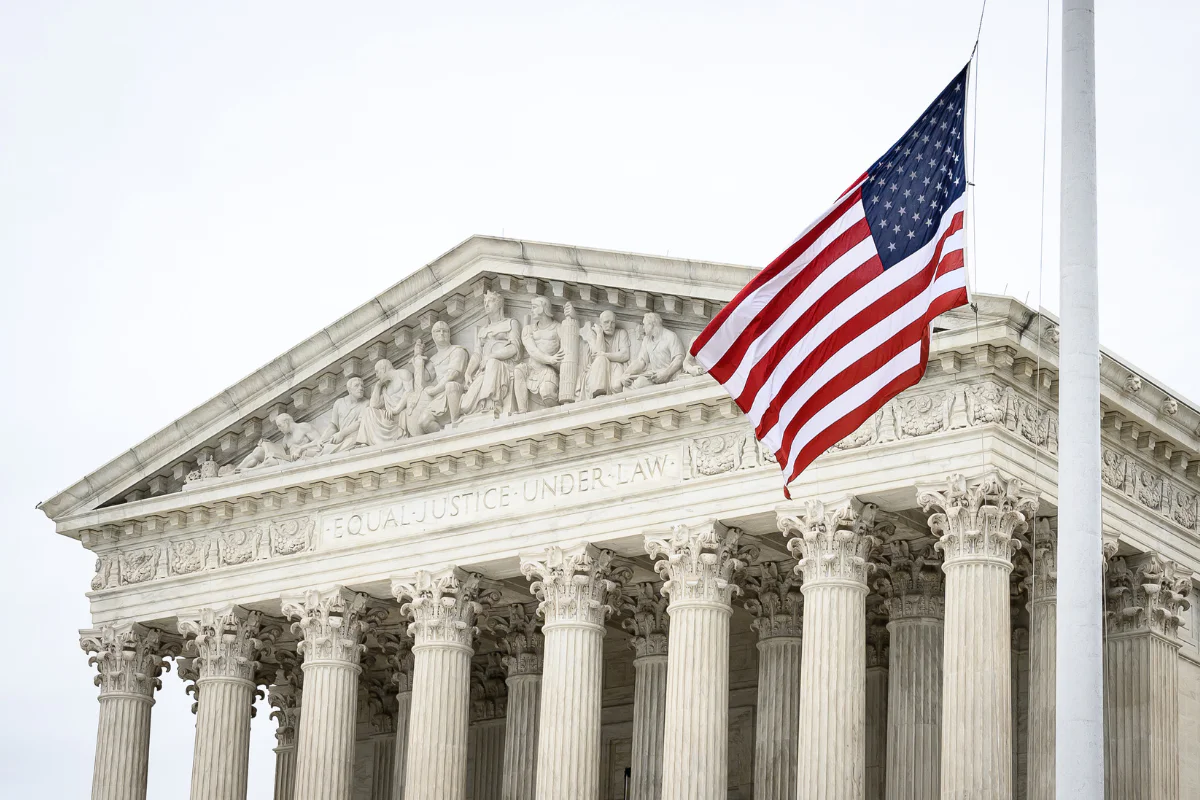
On February 20, 2026, the Supreme Court of the United States (the Court) delivered a landmark ruling in Learning Resources, Inc. v. Trump, fundamentally reshaping the scope of presidential tariff authority under the law of the United States. In a 6–3 decision, the Court held that the International Emergency Economic Powers Act (IEEPA) does not authorize the U.S. President to impose tariffs, invalidating a sweeping set of “emergency” trade measures that had significant implications for Canada and other U.S. trading partners.
For Canadian exporters, importers and investors, the Court’s decision brings both short-term relief and renewed uncertainty, particularly given President Trump’s immediate response announcing a new 10% global tariff under a different statutory authority.
The decision: Limits on emergency tariff powers
The case arose from challenges by U.S. importers, including Learning Resources, Inc., to tariffs imposed by President Trump under IEEPA following declarations of national emergencies related to drug trafficking and persistent trade deficits. Relying on IEEPA’s authority to “regulate … importation,” the administration imposed:
- 25% tariffs on goods from Canada and Mexico that were not compliant with the Canada-US-Mexico Agreement (CUSMA);
- 10% tariffs on imports from China; and
- a baseline tariff of at least 10% on a wide variety of imports worldwide, with higher rates for certain countries.
Chief Justice Roberts, writing for the majority, concluded that tariffs are a form of taxation, a power the U.S. Constitution assigns to Congress. The Court held that Congress did not clearly delegate this authority to the U.S. President in IEEPA and emphasized that no prior president had ever used the statute to impose tariffs in its nearly 50-year history.
While the Court dismissed Learning Resources, Inc.’s specific claim on jurisdictional grounds, it issued a definitive holding on the merits, which were that IEEPA is not a tariff statute. The ruling also resolved the companion case Trump v. V.O.S. Selections, Inc., reinforcing the same limitation on executive power.
Invalidated tariffs on Canadian goods
For Canada, the most immediate consequence is the invalidation of IEEPA-based tariffs applied to Canadian exports, including the 25% duties on goods non-compliant with CUSMA justified by the U.S. administration as measures to combat fentanyl trafficking. These tariffs are now unlawful and may no longer be collected.
Canadian exporters in sectors such as manufacturing, agriculture, consumer products and industrial inputs should see near-term relief from these duties, subject to U.S. Customs implementation timelines.
Potential refunds and litigation
The Court did not order automatic refunds of tariffs already paid. Recovery may depend on whether entries remain unliquidated or whether importers pursue claims before the U.S. Court of International Trade. Canadian companies with U.S. operations or importer-of-record status should assess refund opportunities promptly.
What the decision does not change
The ruling is narrowly focused on IEEPA. It does not invalidate tariffs imposed under other U.S. trade statutes, including:
- Section 232 of the Trade Expansion Act (national security tariffs on steel, aluminum, autos and certain parts); or
- Section 301 of the Trade Act of 1974 (tariffs responding to unfair trade practices, most notably against China).
As a result, Canadian exporters remain subject to certain U.S. tariffs that pre-date or are independent of the invalidated emergency measures.
Implications for CUSMA and cross-border trade
From a Canadian perspective, the Court’s decision reinforces the importance of legislative discipline and treaty-based trade rules. While CUSMA remains in force, the case illustrates how unilateral U.S. trade actions, particularly those framed as “emergencies,” can disrupt integrated North American supply chains. The Court’s emphasis in the decision on clear congressional authorization may reduce the risk of abrupt, unilateral tariff programs going forward, but it also signals that trade volatility is likely to continue through alternative statutory tools.
President Trump’s response: A new 10% global tariff
Within hours of the decision, President Trump announced that he would pivot to other statutory authorities to preserve his tariff agenda. On February 20, 2026, he signed an executive order imposing a new 10% global tariff on a variety of imports, invoking Section 122 of the Trade Act of 1974.
Section 122 of the Trade Act of 1974 allows the President to impose temporary, non-discriminatory tariffs of up to 15% for up to 150 days to address serious balance-of-payments deficits. The White House confirmed that:
- the new tariff takes effect February 24, 2026;
- certain goods (including pharmaceuticals, critical minerals and select agricultural products) are exempt; and
- Canada and Mexico are largely exempt where goods qualify for protection against tariffs under CUSMA rules of origin.
President Trump has indicated that the tariff could be increased (up to 15%) and extended if Congress provides approval, while also signaling potential new investigations under Section 232 of the Trade Expansion Act and Section 301 of the Trade Act of 1974.
Key takeaways for Canadian businesses
In light of the Court’s decision and President Trump’s subsequent actions, Canadian businesses should consider the following key takeaways:
- the Court has decisively limited U.S. presidential tariff powers under emergency legislation;
- IEEPA-based tariffs on Canadian goods are unlawful – however, refunds are not automatic;
- significant U.S. tariff authorities remain intact under statutes for goods non-compliant with CUSMA; and
- President Trump’s new 10% global tariff underscores that trade risk has shifted, not disappeared.
Canadian businesses should continue to monitor U.S. trade developments closely and assess contractual, pricing and supply-chain exposure accordingly. Organizations should consult the MLT Aikins corporate and international trade teams to assess how these recent tariff developments affect their operations and to determine the most effective path forward.
Note: This article is of a general nature only and is not exhaustive of all possible legal rights or remedies. In addition, laws may change over time and should be interpreted only in the context of particular circumstances such that these materials are not intended to be relied upon or taken as legal advice or opinion. Readers should consult a legal professional for specific advice in any particular situation.
Share
Related Insights
The Jay Treaty and Indigenous border rights in the ICE age