Orange Shirt Day – National Day for Truth and Reconciliation
The National Day for Truth and Reconciliation, also known as Orange Shirt Day, is a day to honour the Indigenous children taken from their families through the residential school system.
Observed annually on September 30, it raises awareness of the traumatic experiences faced by Indigenous peoples who attended the residential schools, as well as its impact on families and communities. The day recognizes the intergenerational impacts and ongoing violence Indigenous communities continue to face due to the historical harms caused by the residential school system.
History of National Day for Truth and Reconciliation
Canada’s 140 federally run residential schools operated from 1867 to 1996, leading to widespread advocacy for recognition, reparations and accountability from survivors. Key developments include:
- The Indian Residential Schools Settlement Agreement
- Government apologies
- The establishment of the Truth and Reconciliation Commission (TRC)
- The creation of the National Centre for Truth and Reconciliation
The Orange Shirt Movement
Orange Shirt Day began in 2013 as an Indigenous-led grassroots movement first honoured in 2013 to raise awareness about the intergenerational impacts of residential schools on Indigenous children, families and communities.
Orange Shirt Day takes its name from the story of Phyllis Webstad, a member of the Stswecem’c Xgat’tem First Nation, whose new orange shirt (a gift from her grandmother) was taken from her on her first day at St. Joseph Mission Residential School in 1973.
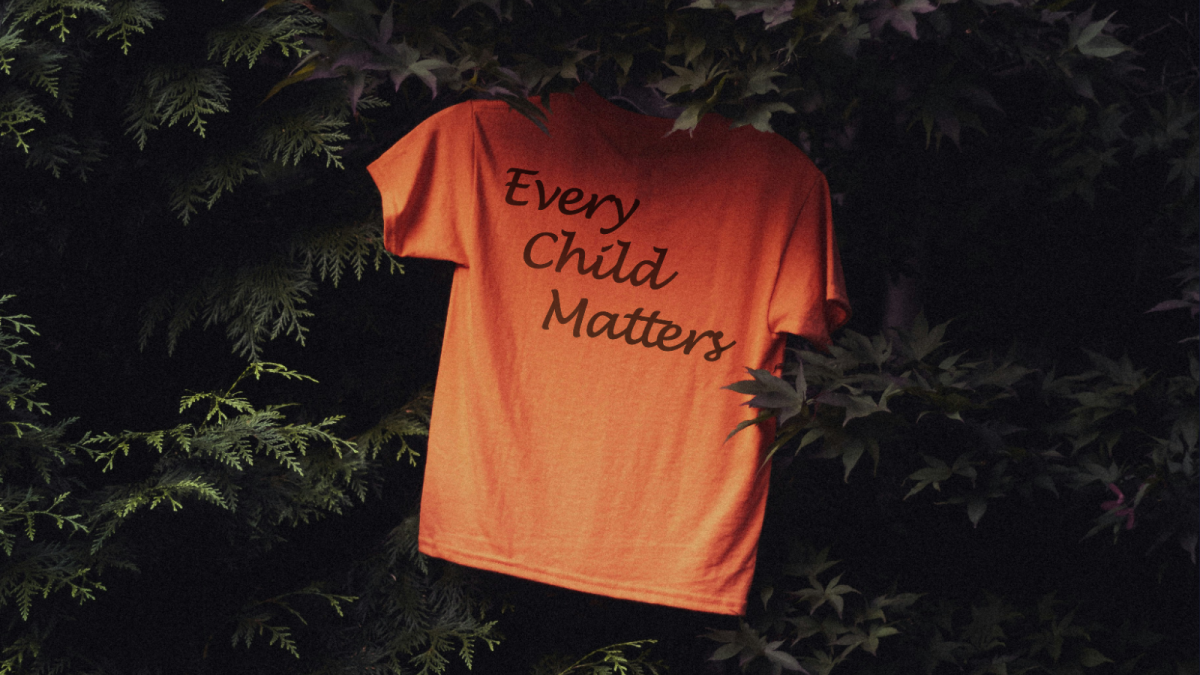
The orange shirt has since become a powerful symbol of the loss of culture, freedom and self-esteem experienced by Indigenous children, a visual representation to raise awareness of the impacts of residential schools, and a reminder that Every Child Matters.
Truth and Reconciliation Commission
The National Day for Truth and Reconciliation became a federal holiday in 2021 to fulfil call to action #80 of the TRC, which states:
“We call upon the federal government in collaboration with Aboriginal peoples, to establish, as a statutory holiday, a National Day for Truth and Reconciliation to honour Survivors, their families, and communities, and to ensure that public commemoration of residential school history remains integral to the reconciliation process.”
The date, September 30 was chosen because it marks the time of the year when children were taken from their homes to attend one of the residential schools.
Importance of the National Day for Truth and Reconciliation
The day honours the memory of children who never returned home and acknowledges the ongoing trauma faced by survivors and their communities. Public commemoration is vital for reconciliation, as it allows for reflection on the historical injustices of colonization and the residential school system.
Key statistics
- Estimated deaths of residential school students: more than 6,000
- Odds of a student dying during the program: 1 in 25
- At least 40 deaths occurred in school fires
How to participate in Truth and Reconciliation Day
- Wear orange and show solidarity with survivors.
- Support organizations like the Indian Residential School Survivor Society.
- Learn about the residential school system and the ongoing impacts on Indigenous communities.
- Share knowledge with others about these critical issues.
Resources & Reading
- The National Centre for Truth and Reconciliation is hosting Truth and Reconciliation Week 2026 which takes place September 21-25. This free educational programming is open to students, educators and the public. Join daily Lunch & Learns, witness “From Roots We Rise: A Youth Gathering,” engage in meaningful dialogues and contribute to our collective path toward reconciliation.
- Read about Orange Shirt Day and share the story with friends and family. It is an opportunity to keep the discussion about reconciliation going and inform others about the impact of residential schools.
- Visit the National Centre for Truth and Reconciliation’s site and read the Truth & Reconciliation Commission reports.
- Learn why it’s important to make the distinction between First Nations, Inuit and Métis peoples
- Visit the Canadian Museum of Human Rights to explore exhibits such as “The Witness Blanket,” which highlights the truth about residential schools through the Stories and experiences of Survivors.
- Read “Starting to Talk: A Guide for Communities on Healing and Reconciliation from the Legacy of Indian Residential Schools” by The Sioux Lookout Community Coalition for Healing and Reconciliation c/o the Sioux Lookout Anti-Racism Committee
- Read the United Nations Declaration on the Rights of Indigenous Peoples
Further reading
- The Indigenous Peoples Atlas of Canada — History of Residential Schools
- Indigenous Perspectives Education Guide by Historica Canada
- A Knock on the Door: The Essential History of Residential Schools from the Truth and Reconciliation Commission of Canada | Phil Fontaine, Aimée Craft and the TRC
- They Came for the Children: Canada, Aboriginal Peoples, and Residential Schools
- The Survivors Speak: A Report of the Truth and Reconciliation Commission of Canada
Memoirs
- Theodore Fontaine, Broken Circle: The Dark Legacy of Indian Residential Schools: A Memoir (2010)
- Bev Sellars, They Called Me Number One: Secrets and Survival at an Indian Residential School (2012)
- Edmund Metatawabin with Alexandra Shimo, Up Ghost River: A Chief’s Journey Through the Turbulent Waters of Native History (2015)
- Joseph Auguste (Augie) Merasty, The Education of Augie Merasty: A Residential School Memoir (2015/2017)
- Isabelle Knockwood, Out of the Depths: The Experiences of Mi’kmaw Children at the Indian Residential School at Shubenacadie, Nova Scotia (1992/2015)
Film and other media
- Residential Schools Film Collection | Indigenous Cinema | National Film Board
- Picking Up the Pieces: The Making of the Witness Blanket (2018) | Carey Newman & Cody Graham
- Remembering the Forgotten Children (2017) | Graham Constant
- In Jesus’ Name: Shattering the Silence of St. Anne’s Residential School (2017) | Susan Enberg
- Holy Angels (2017) | Jay Cardinal Villeneuve
- From Up North (2016) | Trudy Stewart
- We Were Children (2012) | Tim Wolochatiuk
- Videos | National Centre for Truth and Reconciliation | YouTube
- Residential Schools podcast series | Historica Canada | Hosted by Shaneen Robinson-Desjarlais
- The Indian Act Explained
Courses