U.S. Supreme Court may rule U.S. tariffs on some Canadian goods illegal


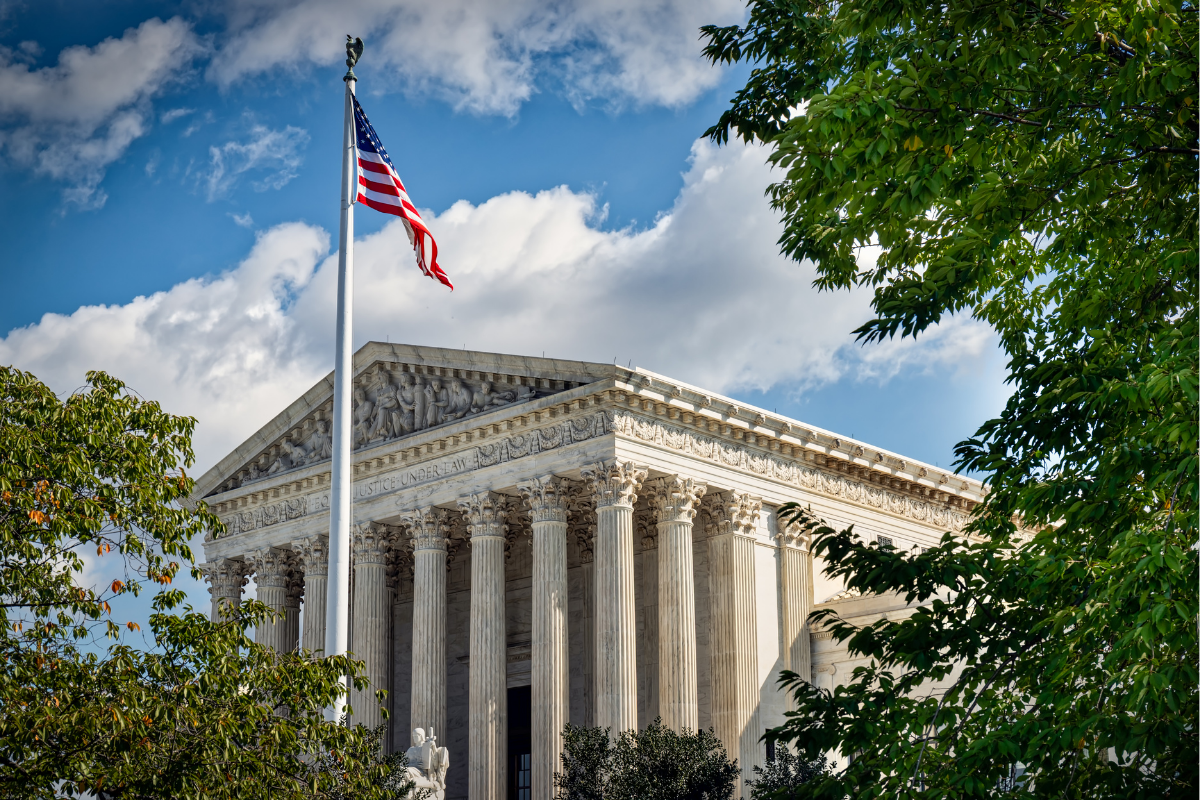
Canadian businesses have paid some portion of what the White House says is about US$1 trillion in tariffs imposed by the current administration by executive orders. Whether some of those orders are within the authority granted to the President by Congress under the International Emergency Economic Powers Act (IEEPA) is under consideration by the U.S. Supreme Court after it heard oral argument last year in the case Learning Resources, Inc. v. Trump (Tariffs) (consolidated with Trump v. V.O.S. Selections).
A key question in the case is whether a tariff is a tax or a way to regulate foreign imports. The question of whether the imposition of a charge, like a tariff, constitutes a tax has repeatedly arisen in American history since its inception. In the decade or so leading up to the formation of the United States, the British Parliament passed laws imposing what the American colonists said were not legitimate tariffs but impermissible taxes on products like lead, paint, paper and most famously tea. After a “party” in Boston, a revolution ensued.
This time, the stakes are not as high. But a court ruling that the tariffs are illegal would open the door to potential recovery by Canadian businesses that have paid tariffs.
Checks and balances
Article I of the United States Constitution states: “The Congress shall have Power To lay and collect Taxes, Duties, Imposts and Excises” and “To regulate Commerce with foreign Nations.” Powers conferred on Congress may not be delegated without limits. Article II grants the President broad powers over foreign policy. This includes a key role in treaties and executive agreements but not commerce or trade. The President does not have the power to tax or regulate commerce unless the power is expressly granted by Congress.
The IEEPA delegates power to the President during times of war or national emergencies. An emergency or war needs to be proclaimed by the President and then the President needs to notify Congress. To end a state of emergency under the IEEPA, Congress can pass a joint resolution of disapproval which the President can veto. Congress can override that veto with a two-thirds supermajority.
What does it mean to “regulate importation”?
The IEEPA evolved from the Trading with the Enemy Act and was signed into law by President Carter in 1977. Section 203(a)(1) of the IEEPA states: “the President may, under such regulations as he may prescribe, by means of instructions, licenses, or otherwise … investigate, regulate, any … importation with respect to, or transactions involving, any property in which a foreign country or a national thereof has interests.”
Before the case reached the Supreme Court, two lower courts found that the President exceeded his powers under the IEEPA. Additionally, in May 2025, a panel of judges at the U.S. Court of International Trade unanimously ruled that the use of the IEEPA to institute tariffs was illegal. This was upheld by a majority of the U.S. Court of Appeals for the Federal Circuit.
A key question in the case is what “regulate importation” means in the IEEPA. During oral argument at the Supreme Court, the Justices’ questions focused on the meaning of this term and hinted at how they might decide the case. Justices Sotomayor, Kagan and Jackson asked questions suggesting skepticism about whether the President had this power. In particular, Justice Jackson commented that the purpose of the IEEPA was to constrain the emergency powers of the President under the Act. She pointed out that the Trump administration’s interpretation of the Act is at odds with the purpose of the statute.
Likewise, Justice Barrett stated she could not see how “regulate importation” authorized a tariff when prior in the sentence, the Act lists ways to regulate stating that “under such regulations as he may prescribe, by means of instructions, licenses, or otherwise…“. A few times in her questions to Solicitor General Sauer, she referenced the inclusion of “license” in the Act and pondered why it was that the administration chose tariffs, which is not expressly written, instead of a license. She also asked if there were any historical cases where “regulate importation” meant tariffs, which General Sauer was unable to provide. She also drew a blank from counsel for the respondent, Neil Katyal, who could not identify any example where a President using a license under IEEPA charged a fee.
Several justices expressed concern over the expansive scope of the power asserted by the administration. It was of particular concern for Justice Gorsuch as he saw the potential for almost anything to be used to declare an emergency to access this power. Several justices noted that the President is afforded significant deference in declaring an emergency to enact a statute. However, because overriding a presidential veto requires a supermajority in Congress, the IEEPA imposes a high burden to revoke that power.
Chief Justice Roberts expressed the concern that while tariffs involve foreign affairs, the administration’s use of them results in the imposition of taxes on Americans, which have always been “the core power of Congress.”
A messy refund?
Considering the possibility that the Court would rule against the administration, Justice Barrett characterized the possible return of the billions of dollars already paid in tariffs a “mess.” Treasury Secretary Scott Bessent has estimated that US$750 billion to US$1 trillion in tariffs have already been collected. He has stated that a ruling against the tariffs would result in massive refunds on about half the tariffs. Additionally, he has commented that unwinding them could cause significant disruption. The longer the Supreme Court takes to rule, the more complex the situation becomes.
Recovery of funds paid will be complicated. Mr. Katyal told the court that only the companies in the lawsuit would automatically get refunds.
For most Canadian business, except in certain sectors, a 35% tariff on non-complaint goods and a 50% on steel, aluminum and copper products are in place. Even if the tariffs imposed are found to be illegal, the administration may be able to justify their imposition under some other authority. Additionally, omnibus or possibly class-wide recovery may be difficult as shipments had different tariff rates that have changed many times since their imposition.
Nevertheless, a decision finding the tariffs unlawful may result in some portion of the collected tariffs becoming recoverable. It remains to be seen if the U.S. government adopts any process for potential recovery, but it has been reported that many U.S. companies are filing protective protests with U.S. customs to keep their rights to refunds. Media reports indicate at least Costco has filed suit in anticipation of a decision dismissing the administration’s appeal.
A decision from the Supreme Court is expected soon.
Note: This article is of a general nature only and is not exhaustive of all possible legal rights or remedies. In addition, laws may change over time and should be interpreted only in the context of particular circumstances such that these materials are not intended to be relied upon or taken as legal advice or opinion. Readers should consult a legal professional for specific advice in any particular situation.
Share
Related Insights

The importance of IP in M&A transactions