Who holds the power? Presidential tariff authority and legal challenges


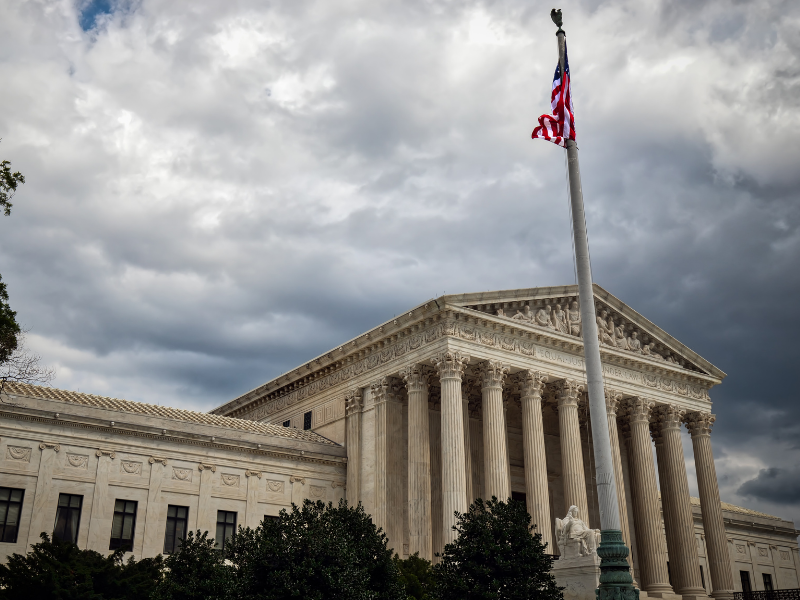
This Insight examines presidential tariff powers in the context of ongoing U.S.–Canada trade tensions. It explains where tariff power comes from under the U.S. Constitution, outlines the trade statutes through which Congress has delegated tariff authority to the president and reviews the tariffs President Trump has imposed during his second term, including those affecting Canada. It also discusses the legal challenges to those tariffs and where the remaining court challenges currently stand.
Where tariff power comes from
Article I of the U.S. Constitution gives Congress, not the president, the power to impose taxes and duties. The U.S. Supreme Court has long treated tariffs as part of that taxing power. The president’s powers, set out in Article II, do not include the power to tax, so the president has no tariff power of his own.
Congress can delegate some of its tariff power to the president and has done so in several trade statutes. When it does, it uses clear language and sets firm limits. The president may only impose tariffs where Congress has allowed it and only within the limits Congress has set.
Tariff powers Congress has delegated to the President
Six statutory provisions may authorize the president to impose tariffs:
- Section 232 of the Trade Expansion Act of 1962
- Section 201 of the Trade Act of 1974
- Section 301 of the Trade Act of 1974
- Section 122 of the Trade Act of 1974
- Section 338 of the Tariff Act of 1930
- The International Emergency Economic Powers Act of 1977 (IEEPA)
The first three provisions require an investigation before tariffs may be imposed, while the latter three permit the president to act without a prior investigation.
Section 232 of the Trade Expansion Act of 1962: National security
The U.S. Department of Commerce investigates whether imports of a product threaten to impair U.S. national security. If it finds a threat, the president may act to adjust imports of that product, including through tariffs. The law sets no fixed end date. Courts have generally deferred to the president under Section 232.
Section 201 of the Trade Act of 1974: Safeguards
Section 201 lets the President impose tariffs when the U.S. International Trade Commission finds that rising imports are a substantial cause of serious injury, or threat of serious injury, to a U.S. industry. The relief is temporary and is meant to give the industry time to adjust. It can last up to four years at first and up to eight years in total with extensions. No current tariffs against Canada have been issued under section 201.
Section 301 of the Trade Act of 1974: Unfair foreign practices
The U.S. Trade Representative (USTR) can investigate another country’s actions, policies or practices. If the USTR finds they are unreasonable or discriminatory and burden U.S. commerce, the president may impose tariffs based on the USTR’s recommendations. Section 301 tariffs have no built-in end date.
Section 122 of the Trade Act of 1974: Balance-of-payments surcharge
Section 122 authorizes a president to impose temporary tariffs of up to 15% for international payments problems requiring special import measures to deal with serious balance-of-payments deficits, to prevent an imminent and significant depreciation of the U.S. dollar or to cooperate with other countries in correcting international balance-of-payments disequilibrium. These tariffs are only effective for up to 150 days. Anything longer requires an act of Congress.
Section 338 of the Tariff Act of 1930: Discriminatory trade practices
Section 338 authorizes the president to impose tariffs on countries that engage in unfair or discriminatory trade practices against the United States. The provision has never been used before President Trump invoked it in 2026.
IEEPA: Emergency powers (but not tariffs)
IEEPA allows a president to regulate commerce in a national emergency. President Trump was the first president to use IEEPA to impose tariffs. As explained below, IEEPA does not permit a president to impose tariffs.
Key tariff actions in President Trump’s second term
In 2025 the President used IEEPA to impose 25% tariffs on Canada and Mexico and 10%, later raised to 20%, on China, citing a drug-trafficking emergency. He also imposed worldwide “reciprocal” tariffs of 10% or more, citing a trade-deficit emergency.
On February 20, 2026, the Supreme Court of the United States struck down both sets of tariffs holding IEEPA does not permit the president to impose tariffs. The Court explained that tariffs are a form of taxation, a power the Constitution gives to Congress.
The same day, President Trump announced a worldwide tariff of 10% on all U.S. imports under section 122.
On May 7, 2026, the U.S. Court of International Trade (CIT) ruled that the Section 122 tariff was unlawful. The CIT ordered the government to stop collecting the tariff from the three importers plaintiffs and to refund what they had paid. It refused to extend that relief to all importers. On June 11, 2026, the U.S. Court of Appeals for the Federal Circuit paused the CIT ruling while the appeal proceeds. Unlike IEEPA, section 122 clearly allows the president to issue tariffs, so the question is whether this tariff stayed within the statute’s limits.
On June 2, 2026, the USTR found that 60 economies’ failure to ban imports made with forced labor was unreasonable and a burden on U.S. commerce. When the Section 122 tariff expired on July 23, 2026, the administration replaced it with Section 301 tariffs of 10% to 12.5% on those 60 jurisdictions, including Canada, with no end date. These tariffs impact goods accounting for 99.4% of all U.S. imports.
Section 232 tariffs have had a significant impact on Canada. In 2025, President Trump reinstated tariffs on steel and aluminum and eliminated country-specific exemptions. Section 232 tariffs also apply to other key Canadian exports, including copper, timber, lumber and trucks. All these tariffs came into effect after investigations by the U.S. Department of Commerce found threats to national security risks related to the import of these products.
Most recently, President Trump has also relied on Section 338 to impose tariffs targeting Canada.
Where the court challenges stand
- Section 122: The government’s appeal is pending at the Federal Circuit, and the CIT ruling remains paused until the appeal is decided. The tariff imposed has since expired.
- Section 301: The section 301 tariffs have already been challenged at the CIT. The hearing took place on September 30, 2026, and the court announced it will rule as quickly as they can.
- Section 232: Courts rarely second-guess Section 232 national security findings. A pending CIT case instead challenges how U.S. Customs and Border Protection calculates the value of steel and aluminum subject to these tariffs.
- Section 338: On October 20, 2026, a lawsuit was filed in the United States Court of International Trade challenging President Trump’s use of Section 338. For more details, see our recent Insight here.
MLT Aikins continues to monitor developments in the Canada-U.S. tariff landscape. If your organization would like help assessing how these tariffs may affect your operations or cross-border strategy, please reach out to the MLT Aikins Corporate and Commercial and Competition/Antitrust, Investment and Trade teams.
Note: This article is of a general nature only and is not exhaustive of all possible legal rights or remedies. In addition, laws may change over time and should be interpreted only in the context of particular circumstances such that these materials are not intended to be relied upon or taken as legal advice or opinion. Readers should consult a legal professional for specific advice in any particular situation.
Share
Related Insights

U.S. importer challenges Section 338 tariffs on Canadian goods
What Canadian businesses need to know about the U.S. tariff refund appeal