What employers need to know about random drug and alcohol testing in Canada


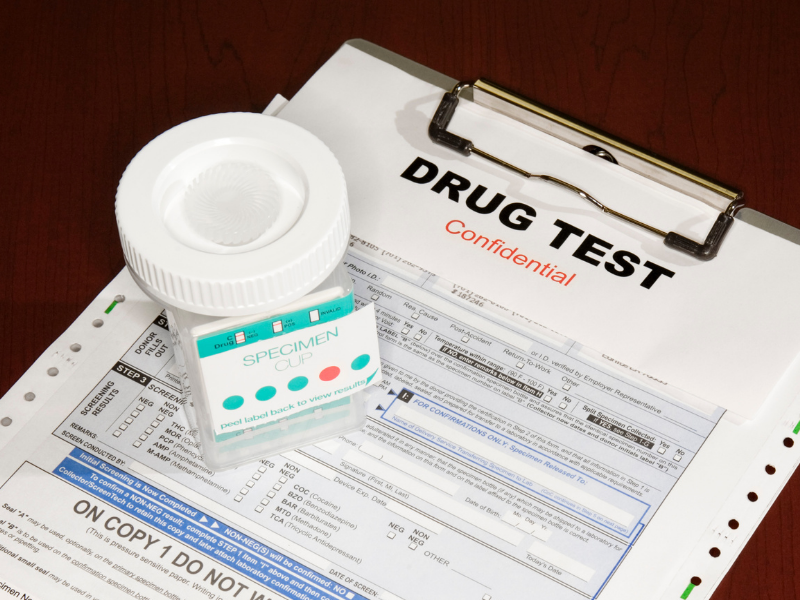
Few areas of labour and employment law require employers to navigate as many competing obligations as workplace drug and alcohol testing. While employers have a duty to maintain a safe workplace, courts and labour arbitrators have consistently held that testing must be justified by the circumstances and cannot be imposed without limits.
In a previous Insight, we reviewed the legal framework governing post-incident drug and alcohol testing. In this Insight, we examine one of the most contentious forms of workplace testing: Random drug and alcohol testing. A recent arbitration decision involving the Toronto Transit Commission (TTC) reinforces the high threshold employers must meet before implementing a random testing program and provides helpful guidance on when such testing may be permissible.
Safety sensitive positions
As a general rule, drug and alcohol testing in Canada is restricted to employees who occupy safety-sensitive positions. A position is considered safety-sensitive when impairment in that role could reasonably cause serious harm or create significant safety hazards. The justification for testing in these roles is grounded in the employer’s obligation to manage safety risks inherent in the work being performed.
When is random testing permissible?
The default position is that random drug and alcohol testing is not permitted. There are, however, three recognized exceptions to this general rule:
Exception 1: Return-to-work or treatment monitoring programs
Random drug and alcohol testing is generally permitted where an employee has agreed to participate in a return-to-work, rehabilitation or treatment monitoring program that includes random testing. These programs are typically implemented following a positive test, substance-use disclosure or treatment for substance dependence.
The authority to conduct random testing in these circumstances arises from the terms of the return-to-work or monitoring arrangement, rather than from a general employer right to conduct random testing.
Exception 2: Systemic drug problems in a dangerous workplace
Random drug and alcohol testing may also be permissible in an inherently dangerous place of employment where the employer can demonstrate that a general problem with drug and/or alcohol abuse exists in the workplace and that random testing is being implemented to address that problem. To justify random testing in these circumstances, an employer must establish that:
- The workplace is inherently dangerous
- There is a demonstrated, general problem with drug and/or alcohol abuse in that workplace
- The proposed testing is intended to address that existing problem, rather than being implemented solely as a preventative measure
This exception sets a high threshold. Evidence of a dangerous workplace, standing alone, is not sufficient to justify random testing.
Exception 3: Statutory or regulatory authorization
In certain circumstances, legislation, regulations or other legally binding requirements may expressly authorize or require random drug and alcohol testing. Where such a regime applies, the employer’s authority to conduct random testing will be assessed in light of that specific legislative or regulatory framework.
This Insight focuses on the common law and arbitral principles governing random testing in workplaces where no statutory or regulatory testing regime applies.
Lessons from the TTC decision
In the 2026 labour arbitration decision, Amalgamated Transit Union, Local 113 v. Toronto Transit Commission, the arbitrator struck down the TTC’s random drug and alcohol testing program and ordered the immediate cessation of random testing. The TTC had expanded its Fitness for Duty Policy in 2016 to include random oral fluid testing for approximately 87% of its 16,000-person workforce, with positive results potentially resulting in discipline up to and including termination.
The decision provides several important lessons for employers considering random drug and alcohol testing:
- A dangerous workplace is not enough – The TTC argued that the inherently dangerous nature of mass public transit justified random testing. The arbitrator rejected that argument. Employers seeking to implement random testing must do more than demonstrate workplace safety risks. They must be able to establish a demonstrated workplace substance-abuse problem that justifies the intrusion on employee privacy.
- Evidence matters – The TTC was unable to establish that drug and alcohol use within its workforce was materially different from rates that exist in society generally. Employers considering random testing should be prepared to rely on concrete, workplace-specific evidence demonstrating a general problem with drug and/or alcohol abuse in their workplace.
- Detection is not the same as impairment – The TTC treated a positive oral fluid test as evidence that an employee was unfit for duty. However, the testing methodology could not reliably establish that an employee was actually impaired at the time of testing. This is particularly important in the context of cannabis, where detectable substances may remain present long after any impairing effects have dissipated.
- The science must support the policy – The TTC’s oral fluid testing methodology and cut-off levels for THC and cocaine were not shown to reliably identify employees who posed a safety risk. Employers should ensure that any testing methodology is scientifically defensible and capable of supporting the consequences attached to a positive result.
Overall, the decision reinforces the significant burden employers face when attempting to justify random drug and alcohol testing. Even in highly safety-sensitive workplaces, employers must be able to demonstrate more than the existence of workplace hazards. Random testing must be supported by evidence of a workplace substance-abuse problem and a testing methodology that is capable of identifying genuine safety risks.
Key takeaways for employers
- Random testing remains a high-risk area requiring careful legal analysis
- Random drug and alcohol testing is generally limited to safety-sensitive positions and specific circumstances
- The default position is that random testing is not permitted
- Even in inherently dangerous workplaces, random testing requires evidence of a demonstrated workplace substance-abuse problem
- A dangerous workplace, standing alone, is not sufficient to justify random testing
- Employers should ensure that any testing methodology is scientifically reliable and capable of identifying an actual safety risk
Random drug and alcohol testing remains the most legally restricted form of workplace testing in Canada. Before implementing a random testing program, employers should carefully assess whether they can establish the legal and evidentiary foundation required to justify it. Where that foundation is absent, other forms of testing, such as reasonable-cause, post-incident or return-to-work testing, may provide a more defensible means of addressing workplace safety concerns.
Note: This article is of a general nature only and is not exhaustive of all possible legal rights or remedies. In addition, laws may change over time and should be interpreted only in the context of particular circumstances such that these materials are not intended to be relied upon or taken as legal advice or opinion. Readers should consult a legal professional for specific advice in any particular situation.
Share
Related Insights

What employers need to know about smart glasses in the workplace