Cold Lake First Nation challenges the Pacific Link Pipeline, Canada’s first national interest project


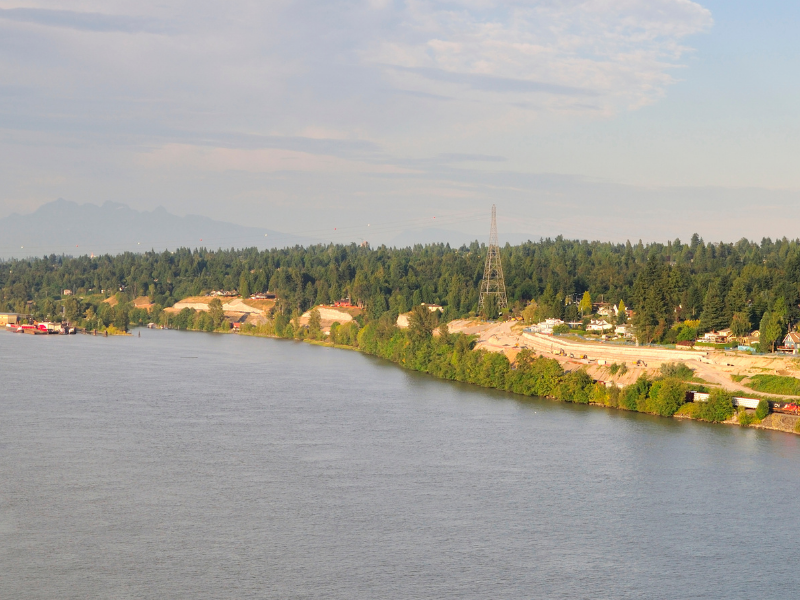
On October 1, 2026, through Order in Council 2026-0925, Canada designated the Pacific Link Pipeline as a national interest project to be listed at Schedule 1 to the Building Canada Act (BCA). This designation is Canada’s first use of the BCA’s strongest measures, intended to speed up approval processes for major infrastructure projects.
What does a national interest project designation do?
The BCA was enacted by Parliament on June 26, 2025, to encourage the expedited development of major, national-level infrastructure projects by simplifying the regulatory process for securing Federal authorizations required to complete those projects.
Section 5(1) of the BCA allows Canada to designate a project a national interest project. Once a project is designated a national interest project, under section 7(1) of the BCA, Canada must issue a document deemed to be each Federal authorization that would have been required in order to construct and operate the project.
The practical outcome is that a designated national interest project is deemed to be approved. The rest of its regulatory process only deals with the conditions under which it will be constructed and operated.
What is the Pacific Link Pipeline?
The Pacific Link Pipeline (the Project) is a 1,250-kilometer-long pipeline which would transport 1 million barrels of crude oil per day from a terminal at Bruderheim, Alberta to a deep-water port in Delta, British Columbia. The Project would largely follow the right of way for the existing Trans Mountain Expansion pipeline.
The Project is being advanced by Canada through Trans Mountain Corporation, by Alberta through the Alberta Petroleum Marketing Commission and by Pembina Pipeline Corporation. At least 10% of the ownership interest in the Project currently held by Canada and Alberta is intended to be offered for purchase by Indigenous Peoples.
How did Canada make its decision to designate the Project?
On July 2, 2026, Canada announced it was considering designating the Project. The Major Projects Office engaged with Indigenous peoples on the decision to designate the Project between July 2 and September 18th, 2026.
On October 1, 2026, Canada designated the Project as a national interest project because it determined the Project:
- Is economically important for Canada, since it will allow Canada to more easily sell its oil internationally and will help create employment and investment opportunities for Canadians
- Has a high likelihood of success, since it is being put forward by experienced industry partners like Pembina and Trans Mountain
- Presents a true opportunity to advance the economic interests of Indigenous peoples
Canada also determined that the Project’s environmental impacts could be addressed through effective mitigation measures, which will be decided in the Project’s upcoming regulatory review process.
Canada acknowledged that building a crude oil pipeline does not directly contribute to meeting Canada’s climate objectives but made reference to the Project’s connection to carbon capture projects which would help reduce emissions in Alberta’s oil sands industries.
Canada also referenced the fact that the Major Projects Office had received feedback from many Indigenous communities expressing concern with the consultation process for Canada’s decision. Specifically, Indigenous communities felt that they did not have enough information about the Project to decide whether they supported listing it as a national interest project. They also felt that the consultation process:
- Was inappropriately rushed and hurried
- Took place at a time of year where many of their members were exercising their rights on the land, and therefore were less available to participate in this consultation.
Despite these concerns expressed by Indigenous communities, Canada concluded that designating the Project a national interest project would not result in adverse impacts to Indigenous Peoples’ rights that could not be mitigated or accommodated through the rest of the Project’s regulatory review process.
Cold Lake First Nation’s challenge to Canada’s decision
On October 7, 2026, Cold Lake First Nation filed an application for judicial review of Canada’s decision to designate the Project a national interest project. The Nation says it was not consulted or engaged at all by the Major Projects Office, which means that Canada has failed to discharge its duty to consult.
Cold Lake First Nation is asking the Federal Court to quash Canada’s decision to designate the Project and to declare that Canada has a duty to consult with it on the Project.
At this time, Cold Lake First Nation is the only Indigenous community opposing Canada’s decision in the courts. It is possible, however, that other Indigenous communities will either join Cold Lake First Nation’s judicial review or file their own applications for judicial review with the Federal Court.
What happens next?
It is not clear what will happen next.
If Cold Lake First Nation is successful and Canada’s decision is quashed, then Canada could attempt to re-do its consultation process to designate the Project as a national interest project.
If the judicial review is unsuccessful, Canada is expected to continue its regulatory review process for the Project, led by the Major Projects Office with the support of the Canada Energy Regulator. This process will set the conditions under which the Project would be constructed and operated. At this time, we do not know how the Major Projects Office and Canada Energy Regulator will work together to consult with Indigenous Peoples and complete the Project’s regulatory process.
Canada intends to complete the Project’s regulatory process by September 2027, so that construction of the Project can begin as soon as possible. Given Cold Lake First Nation’s judicial review, however, that timeline could possibly come into question.
We will update this Insight with further information as it becomes available.
Note: This article is of a general nature only and is not exhaustive of all possible legal rights or remedies. In addition, laws may change over time and should be interpreted only in the context of particular circumstances such that these materials are not intended to be relied upon or taken as legal advice or opinion. Readers should consult a legal professional for specific advice in any particular situation.
Share
Related Insights