What employers need to know about smart glasses in the workplace



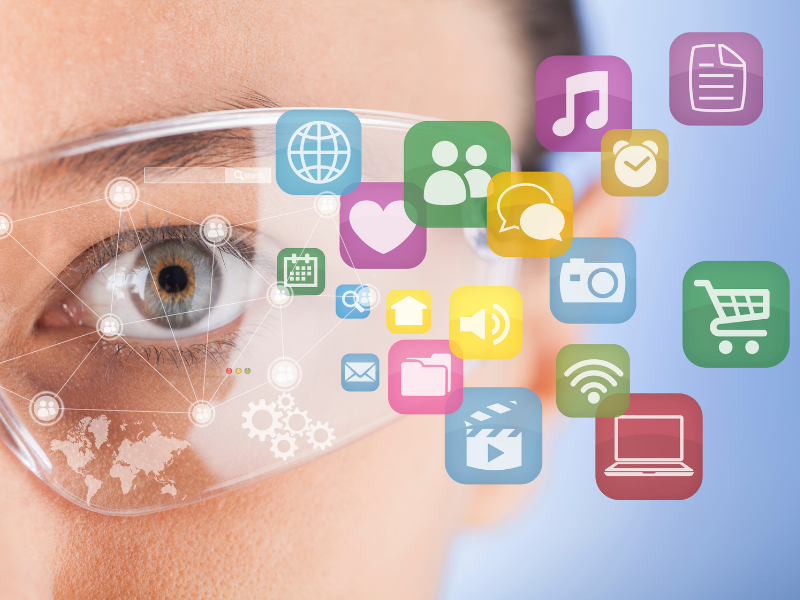
Smart glasses have moved from novelty to workplace reality. No longer a futuristic concept, they are here – and here to stay. These glasses combine cameras, microphones, voice assistants and seamless livestreaming capabilities in a device that’s often indistinguishable from ordinary eyewear.
As these devices increasingly appear in Canadian workplaces, whether in the form of an employee wearing smart glasses into a client meeting or an employer deploying them for hands-free documentation in the field, these devices raise a set of legal, privacy and operational questions that employers can no longer ignore.
This Insight outlines key privacy and employment considerations employers should keep in mind when addressing the use of smart glasses and other AI-enabled wearable technologies in the workplace.
Why smart glasses raise unique privacy concerns
Unlike a smartphone, which is typically held visibly in hand when recording, smart glasses are designed to blend seamlessly into everyday use. As a result, individuals often may not realize they are being recorded, extending privacy risks beyond simply those of data collection, processing and use.
Many smart-glass platforms use AI-powered features that can analyze audio, images, behavioural information and, in some cases, biometric data. This information may be collected, processed, stored and transmitted to cloud-based systems and retained for extended periods. In some cases, this data may be reviewed by third-party contractors to improve system performance. These secondary uses raise privacy concerns that go well beyond what many people associate with a simple audio or video recording.
The Western Canada privacy framework
For employers and organizations in Canada, the privacy implications of smart glasses must be assessed under the applicable Federal and Provincial privacy legislation. The legal landscape varies depending on the province and sector involved:
British Columbia and Alberta
At a Federal level, the Personal Information Protection and Electronic Documents Act, SC 2000, c. 5 (PIPEDA) applies to organizations that collect, use or disclose personal information in the course of commercial activity. British Columbia and Alberta each have their own Personal Information Protection Acts (PIPA) as well, which have been deemed substantially similar to PIPEDA and apply to provincially regulated private-sector employers and expressly governs employee personal information, including workplace monitoring practices.
Saskatchewan and Manitoba
By contrast, Saskatchewan and Manitoba lack substantially similar private-sector legislation on a Provincial level, therefore PIPEDA directly applies to the commercial activities in each province. However, PIPEDA does not generally govern employee personal information in provincially regulated workplaces, leaving a gap in privacy protections.
Despite differences across jurisdictions, the governing principles are consistent. Organizations must:
- Identify a legitimate purpose for collection
- Provide meaningful notice
- Obtain consent where required
- Limit collection to what is reasonably necessary
- Implement appropriate safeguards
- Retain information only as long as necessary
Smart glasses place pressure on each of these principles, particularly when recording is continuous, incidental or difficult for others to detect.
Regulatory direction: Increased scrutiny of AI and biometrics
Canadian privacy regulators have signaled growing concern regarding AI-enabled technologies and biometric information.
The Office of the Privacy Commissioner of Canada (OPC) has identified implications of emerging technologies, including AI-powered tools, as a strategic priority. In 2023, Federal, Provincial, and territorial privacy regulators jointly released Principles for responsible, trustworthy and privacy-protective generative AI technologies, which set expectations for organizations developing and deploying AI systems that collect or process personal information. These principles are directly relevant to smart glasses, which often combine image capture, audio recording AI processing and cloud-based services.
Last year, the OPC published detailed detailed guidance on biometrics, emphasizing that information capable of uniquely identifying an individual – including facial characteristics and voiceprints – constitutes sensitive personal information. Organizations collecting biometric information must generally demonstrate that the collection is:
- Necessary
- Effective
- Minimally intrusive
- Proportionate to the purpose being pursued
In most cases, meaningful and informed consent will also be required.
Practical employment considerations
From a labour and employment perspective, smart glasses introduce a range of issues that employers should address proactively.
The first and most fundamental question is whether smart glasses should be permitted in the workplace at all. While these devices may offer legitimate productivity benefits – including hands-free training, field support, inspections and documentation – they also significantly increase the risk of unauthorized or surreptitious recordings.
A clear, workplace policy can reduce uncertainty and establish expectations. Depending on the workplace, such policies could address:
- When and why smart glasses may be used
- Where recording is prohibited
- How employees and third parties will be notified of recording activities
- Ownership, retention and deletion of recordings
- Cloud storage and AI processing practices
- Protection of confidential, proprietary and personal information
A well-developed policy may also assist employers when addressing employee misconduct involving covert recordings. As the British Columbia Court of Appeal observed in Shalagin v. Mercer Celgar Limited Partnership, 2023 BCCA 373, workplace trust, confidentiality and privacy can be seriously undermined by unauthorized recordings and a properly drafted policy helped protect the employer from liability.
Workplace safety considerations
Employers should also consider workplace safety considerations.
Any device that overlays visual information onto a worker’s field of vision, delivers audio prompts or generates push notifications has the potential to distract workers at critical moments. Organizations should assess smart glasses through existing occupational health and safety processes, including hazard assessments and evaluations of compatibility with required personal protective equipment.
The analysis may vary considerably depending on the work environment, particularly in safety-sensitive workplaces.
Key takeaways
Organizations considering or confronting the use of smart glasses in the workplace should take the following steps:
1. Start with a privacy impact assessment
A privacy impact assessment (PIA) is a proven way to identify and minimize privacy risks before deploying new technology and is required in some contexts under Provincial legislation. A PIA can help identify and mitigate privacy risks before deploying the technology and may be required in certain jurisdictions or circumstances.
2. Update workplace policies
Ensure technology, privacy, monitoring, confidentiality and recording policies specifically address smart glasses and similar wearable technologies
3. Be cautious with biometrics.
If smart glasses capture facial characteristics, voiceprints or other identifying information, employers should carefully assess whether the collection is necessary, proportionate and legally compliant.
4. Know your legal landscape
Privacy obligations vary depending on the province, industry and whether the organization is Federally or Provincially regulated. Employers should ensure they understand the legal framework that applies to their operations.
Final thoughts
Smart glasses offer clear operational benefits, but they also blur the traditional boundaries between convenience, surveillance and workplace privacy. As adoption increases, employers should move beyond viewing these devices as emerging technology and begin treating them as a workplace compliance issue.
Organizations that proactively assess privacy risks, establish clear policies and consider employee and bystander privacy interests will be best positioned to harness the benefits of smart-glass technology while minimizing legal and reputational risk.
The MLT Aikins Privacy, Data Protection and Cybersecurity and Labour and Employment teams regularly advise employers across Canada on privacy compliance, workplace policy development and the practical challenges posed by emerging technologies. If you have questions about how smart glasses or other wearable technologies may affect your organization, we are here to help.
Note: This article is of a general nature only and is not exhaustive of all possible legal rights or remedies. In addition, laws may change over time and should be interpreted only in the context of particular circumstances such that these materials are not intended to be relied upon or taken as legal advice or opinion. Readers should consult a legal professional for specific advice in any particular situation.