AI data centres and the law: What you need to know






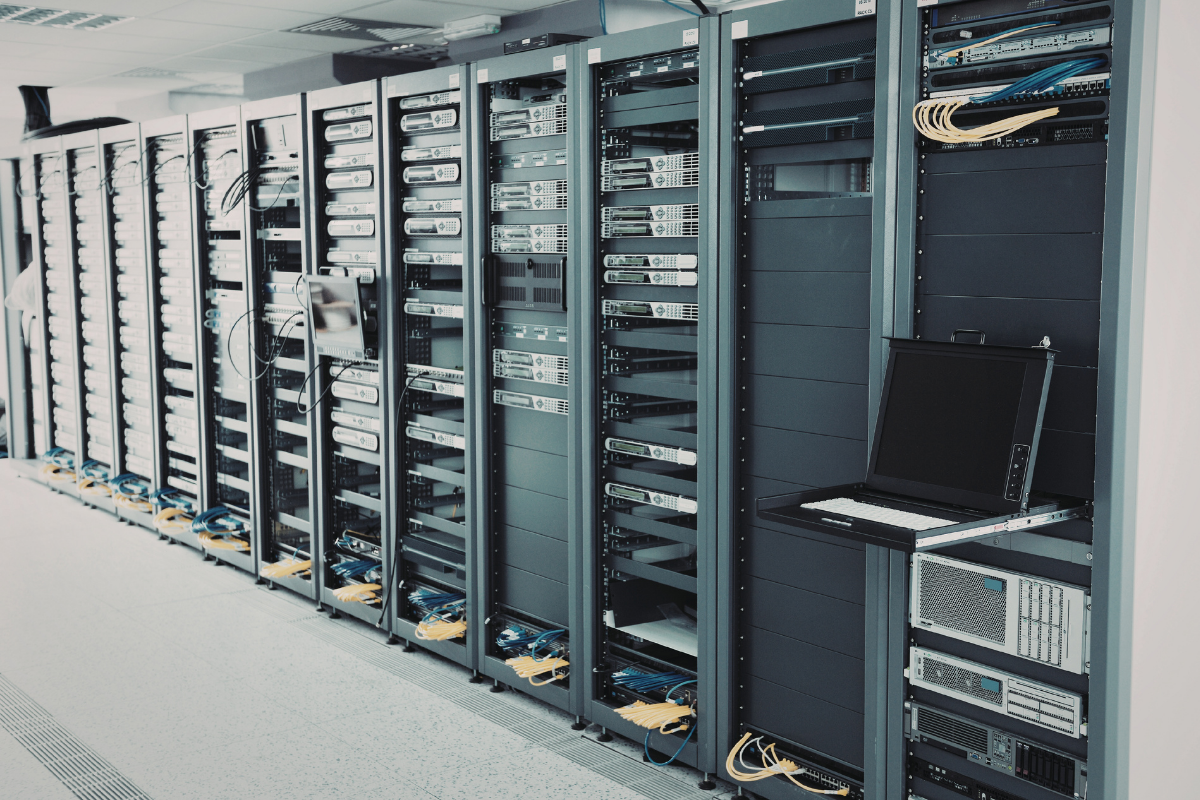
The rapid expansion of artificial intelligence is driving unprecedented demand for data centre infrastructure across Canada and around the world. AI data centres are not ordinary facilities – they house dense computing environments powered by specialized hardware, require enormous amounts of energy for both processing and cooling and handle vast quantities of sensitive data belonging to governments, enterprises and individuals. This confluence of factors creates a complex web of legal obligations and commercial risks that business leaders, legal counsel, IT professionals and procurement teams must understand and manage.
In this guide, we walk through five hot-topic areas that are critical for any organization building, operating, supplying or procuring AI data centre services in Canada. Whether you are a data centre operator navigating privacy obligations, a supplier negotiating commercial agreements or a government client procuring AI-powered infrastructure, the following article will help you identify risks, ask the right questions and take proactive steps to protect your organization.
Data privacy and security obligations for AI data centres
AI data centres collect, process and store enormous volumes of personal information on behalf of their clients. Under Canadian law, the obligations that attach to this personal information are extensive and the consequences of non-compliance can be severe. Whether you are operating a data centre, co-locating equipment or providing managed AI services, understanding the privacy framework is foundational to your risk management strategy.
PIPEDA and the Federal Privacy Framework
The Personal Information Protection and Electronic Documents Act (PIPEDA) is Canada’s principal federal private-sector privacy statute. It governs all private-sector organizations that collect, use or disclose personal information in the course of commercial activities. PIPEDA is founded on ten fair information principles, including accountability, consent, limiting collection, safeguards and individual access. For AI data centre operators, several of these principles carry particular weight.
The accountability principle requires that an organization appoint a designated individual responsible for ensuring compliance with PIPEDA’s requirements – even when personal information is transferred to a third-party processor such as a data centre provider. In other words, if your organization outsources data processing to a data centre, you remain legally responsible for that information. You must use contractual or other means to provide a comparable level of protection while the information is being processed by a third party.
The safeguards principle mandates that personal information must be protected by security measures appropriate to the sensitivity of the information. For AI data centres, this translates into obligations to implement robust physical security (e.g. biometric access controls, video surveillance), technical security (e.g. AES-256 encryption at rest, TLS protocols for data in transit), and administrative safeguards (e.g. access management policies, employee training).
PIPEDA also imposes mandatory breach reporting requirements. Organizations must report to the Privacy Commissioner of Canada any breach of security safeguards involving personal information that creates a real risk of significant harm, notify affected individuals and maintain records of all breaches. Failure to comply with breach reporting obligations can result in fines of up to $100,000 per individual impacted.
Provincial privacy laws
Three provinces – Alberta, British Columbia and Quebec – have enacted their own private-sector privacy laws that have been deemed “substantially similar” to PIPEDA. Organizations operating within those provinces and handling personal information that does not cross provincial or national borders are generally subject to the provincial law rather than PIPEDA. However, PIPEDA continues to apply to all personal information that crosses provincial or national borders in the course of commercial activities.
Quebec’s privacy regime, recently amended by Bill 64, is particularly stringent. It requires organizations to appoint a data protection officer and conduct privacy impact assessments before transferring personal information outside Quebec and provides for administrative penalties of up to $10,000,000 or 2% of worldwide revenue, with courts able to impose fines of up to $25,000,000 or 4% of worldwide revenue. For AI data centres operating in or serving clients in Quebec, compliance with these requirements is essential.
Ontario, New Brunswick, Nova Scotia and Newfoundland and Labrador have also adopted substantially similar legislation with respect to the collection, use and disclosure of personal health information, which may be relevant for AI data centres handling health-related workloads.
Health check: Data privacy and security
- Does your AI data centre have a designated individual or team responsible for privacy compliance under PIPEDA and applicable provincial laws?
- Have you implemented physical, technical and administrative safeguards appropriate to the sensitivity of the personal information you process?
- Do your contracts with clients clearly allocate responsibility for privacy compliance, including breach notification obligations?
- Do you have a current privacy compliance and cybersecurity preparedness plan that reflects the latest legislative changes, including Quebec’s amendments?
- Does your organization maintain records of all security breaches as required by PIPEDA?
Commercial contracting considerations for AI data centre suppliers
The commercial relationships underpinning AI data centres are complex, high value and increasingly competitive. Whether you are a colocation provider, a managed services operator or a supplier of critical infrastructure components, the contracts you negotiate will define your risk exposure for years to come. Getting the contractual framework right is essential to a successful engagement.
Core contract components
A well-structured AI data centre contract typically comprises several interlocking elements:
- A Master Service Agreement (MSA) establishing the overarching terms and conditions
- Service Level Agreements (SLAs) that define performance benchmarks, uptime guarantees, response times and remedies for service failures
- Detailed pricing structures addressing both monthly recurring charges and non-recurring charges
The contract should also address scalability and future technology upgrades, ensuring that services can evolve alongside advancing AI workloads and infrastructure demands.
Service level agreements
SLAs are the cornerstone of any data centre engagement. For AI workloads, SLAs must be particularly rigorous because AI systems are often mission-critical, latency-sensitive and intolerant of downtime. Key SLA metrics should include uptime guarantees (typically 99.99% or higher for Tier III and Tier IV facilities), response times for technical support, performance benchmarks for power and cooling and procedures for planned maintenance and notifications. Service credits for SLA breaches should be meaningful and adequate to compensate for the potential financial impact of service disruptions.
Particular care should be taken where construction or expansion work is occurring on operating data centres, as contractors and service providers may seek to shift SLA breach risk arising from outages caused by construction activities. Contracts should clearly define each party’s liability for both planned and unplanned outages.
Force majeure and supply chain risk
The COVID-19 pandemic, geopolitical tensions and ongoing global supply chain disruptions have made force majeure clauses a renewed focal point in data centre contract negotiations. Critical data centre components – transformers, switchgear, GPUs, cooling systems and generators — regularly face lead times exceeding twelve months. A well-drafted force majeure clause should clearly define the triggering events (including IT outages, supply chain disruptions and pandemic-related events), the obligations of the invoking party (such as notice and mitigation requirements) and the consequences for both parties during and after the force majeure period.
Vendors are increasingly leveraging scarcity in the current market to negotiate more favourable payment terms, including upfront payments and tariff pass-through provisions. Purchasers should ensure that their contracts include protections against unchecked price escalation, clear allocation of tariff risk and realistic delivery schedules tied to milestone-based payments.
Termination and exit strategy
Exit strategy is one of the most critical – and most frequently under-negotiated – aspects of a data centre contract. Termination clauses define the conditions under which parties may disengage and provide the framework for an orderly departure from the service relationship. Because exiting a data centre can be a long and complex process, the contract should ensure adequate time to migrate, with rights to extend for predetermined periods at predetermined costs and clear obligations for “disengagement assistance” from the provider to facilitate a smooth transition.
Health check: Commercial contracting
- Are you using a gated contract approach that maintains flexibility and makes the vendor earn the work at each stage?
- Do your SLAs include clear, measurable uptime guarantees, response times and meaningful service credits for breaches?
- Has your force majeure clause been updated to address supply chain disruptions, IT outages and pandemic-related events?
- Does your contract include robust termination rights and a clear exit strategy, including disengagement assistance obligations?
- Have you engaged legal counsel experienced in technology transactions to review the vendor’s standard contract and negotiate fair risk allocation?
Cybersecurity governance for AI infrastructure
AI data centres represent high-value targets for threat actors. The Canadian Centre for Cyber Security has identified critical infrastructure – including the digital infrastructure underpinning AI workloads – as a primary target for both state-sponsored and criminal cyber threat actors. Establishing robust cybersecurity governance is not merely a technical exercise, it is a legal and operational imperative.
The evolving threat landscape
The National Cyber Threat Assessment 2025–2026 (NCTA), published by the Canadian Centre for Cyber Security, highlights an expanding and complex threat landscape. Cybercrime remains a persistent, widespread and disruptive threat to individuals, organizations and all levels of government across Canada. State-sponsored cyber threat actors from the People’s Republic of China, Russia, Iran and North Korea are conducting wide-ranging campaigns to compromise government and private sector systems. Canada’s adversaries very likely consider civilian critical infrastructure to be a legitimate target for cyber sabotage in the event of a military conflict.
The NCTA notes that cybercriminals are escalating their extortion tactics using increasingly sophisticated cyber tools such as ransomware-as-a-service and artificial intelligence. Common attack vectors targeting data centre infrastructure include ransomware, denial-of-service attacks, insider threats, supply chain compromises and exploitation of internet-accessible industrial control systems.
Recommended cybersecurity measures
The Canadian Centre for Cyber Security recommends a comprehensive set of measures for critical infrastructure operators, many of which are directly applicable to AI data centres. These include implementing strong authentication mechanisms including multi-factor authentication, applying security patches and updates promptly, monitoring ICS and OT environments to detect unusual activity, developing and testing incident response plans specific to operational technology environments, conducting tabletop exercises and regular cybersecurity awareness training for employees, separating IT and OT environments to prevent lateral movement and verifying manual controls and maintaining offline backups.
Organizations should also establish and implement generative AI usage policies that include guidance on how to use AI technology in a way that avoids compromises to the organization’s data and intellectual property. Choosing tools from security-focused vendors and avoiding the use of sensitive corporate or personal information with AI tools are essential protective measures.
Bill C-26 and the Critical Cyber Systems Protection Act
Bill C-26, which proposes amendments to the Telecommunications Act and the establishment of the Critical Cyber Systems Protection Act (CCSPA), represents a significant development in Canada’s cybersecurity regulatory framework. The Bill targets four critical sectors – transportation, telecommunications, finance and energy – and introduces a national reporting mechanism to track cyber events. While the CCSPA does not expressly capture data centres as a standalone sector, AI data centres that are integral to telecommunications or financial services infrastructure may fall within its scope.
NC-CIPSeR, the National Centre for Critical Infrastructure Protection, Security and Resilience, has recommended that the implementation of Bill C-26 integrate mechanisms for periodic updates to compliance requirements, the adoption of zero-trust architecture across critical infrastructure sectors and continuing professional development for front-line CI professionals.
Health check: Cybersecurity governance
- Does your organization have a formal incident response plan tailored to your AI data centre environment, and is it regularly tested?
- Have you implemented multi-factor authentication, network segmentation and continuous monitoring for both IT and operational technology systems?
- Does your organization have a generative AI usage policy that addresses risks to data security, intellectual property and output quality?
- Have you assessed whether your AI data centre falls within the scope of Bill C-26 and the proposed Critical Cyber Systems Protection Act?
- Does your organization’s cybersecurity plan include appropriate insurance coverage for cyber incidents?
AI governance and compliance for government clients procuring data centre services
Government organizations at the federal, provincial and municipal levels are increasingly procuring AI-powered data centre services to modernize operations, improve public services and advance policy objectives. These procurements carry unique obligations and risks that go beyond those faced by private-sector purchasers.
The Canadian government’s cloud-first strategy and data sovereignty
In 2018, the Canadian Federal government adopted a cloud-first strategy, making cloud computing its preferred option for delivering IT services. This strategy emphasizes that sensitive government information must remain within Canadian borders, driving the need for domestic data centre capacity. Federal government data is subject to more stringent rules than private-sector data, often necessitating that sensitive data be stored on Canadian soil due to national security concerns.
The Privacy Act governs how federal government organizations collect, use and disclose personal information, including the personal information of federal employees. Government clients procuring AI data centre services must ensure that their service providers can comply with the Privacy Act’s requirements, in addition to any applicable security classification and clearance obligations.
Procurement framework considerations
The Federal government’s Buy Canadian Procurement Policy Framework, which took effect on December 16, 2025, provides an overarching foundation for procurement policies that prioritize Canadian suppliers, materials and content. Business owners responsible for procurement are required to ensure that intended outcomes are aligned with government priorities, including those articulated in the Speech from the Throne, the budget process and mandate letters. For AI data centre procurements, this may create an expectation that domestic suppliers and domestic data residency options are considered and prioritized.
Government clients should also be aware that the Interim Policy on Reciprocal Procurement, effective July 14, 2025, limits access to federal procurements to suppliers from Canada and from reliable trading partners that provide reciprocal access. This has implications for international data centre providers seeking to serve the Canadian government market.
AI-specific governance obligations
Canada’s proposed Artificial Intelligence and Data Act (AIDA), which was part of Bill C-27, was officially withdrawn in January 2025 after failing to progress through the legislative process. At the time of writing, Canada does not have a comprehensive federal framework specifically governing artificial intelligence. However, the federal government has signalled that a new federal private-sector privacy statute, potentially accompanied by AI-related governance provisions, is expected to be introduced in late 2025 or early 2026.
In the absence of dedicated AI legislation, government clients should look to existing frameworks – including PIPEDA, the Privacy Act, the Treasury Board’s Directive on Automated Decision-Making and departmental policies on the responsible use of AI – to establish governance guardrails for AI data centre procurements. Privacy impact assessments should be conducted prior to deploying AI workloads in data centre environments to identify and mitigate risks to personal information.
Health check: Government procurement of AI data centre services
- Does your procurement process ensure that AI data centre services comply with the Privacy Act, PIPEDA and applicable security classification requirements?
- Have you assessed whether the Buy Canadian Procurement Policy Framework and reciprocal procurement policies apply to your AI data centre procurement?
- Has a privacy impact assessment been completed for the AI workloads to be deployed in the data centre?
- Does your contract require the service provider to store and process federal government data exclusively within Canada?
- Have you established governance guardrails for the responsible use of AI within the procured data centre services, consistent with the Treasury Board’s Directive on Automated Decision-Making?
Data residency and cross-border data transfer issues for Canadian AI data centres
The question of where data is stored and processed is among the most consequential for AI data centre operators and their clients. Data residency requirements intersect with privacy law, national security, trade policy and client expectations, creating a multifaceted compliance challenge.
Does Canadian data have to stay in Canada?
The short answer is: It depends.
PIPEDA does not explicitly require that personal information be stored in Canada. However, PIPEDA treats cross-border data transfers as “use” rather than “disclosure,” meaning that the transferring organization remains fully accountable for the personal information even when it is processed by a third party in another jurisdiction. The organization cannot, through contract or any other means, override the laws of a foreign jurisdiction.
For Federal government data, however, the rules are considerably more restrictive. Sensitive Federal data must generally be stored on Canadian soil due to national security concerns. The Canadian government has established data centres in Toronto and Quebec City specifically to address in-country data residency, failover and disaster recovery requirements.
Provincial variations
Provincial requirements add further complexity. Quebec’s privacy legislation requires organizations to conduct a privacy impact assessment before transferring personal information outside Quebec. British Columbia’s Freedom of Information and Protection of Privacy Act (FIPPA) requires that personal information in the custody or control of public bodies be stored and accessed only in Canada, subject to certain exceptions. Alberta and British Columbia’s private-sector privacy laws may also impose additional requirements depending on the nature of the data and the sector involved.
For AI data centres operating across multiple provinces or serving clients in regulated sectors such as health care or financial services, understanding and complying with these overlapping requirements is essential.
Cross-border transfer risks
When personal information is stored outside Canada, it becomes subject to the laws of the foreign jurisdiction. This is particularly significant where data is stored in the United States, as American legal processes – including those under the CLOUD Act – may compel disclosure of data held by U.S.-based service providers regardless of where the data is physically located. The Office of the Privacy Commissioner of Canada has emphasized that organizations must clearly disclose in their privacy policies that data may be processed in other countries and could be accessed by foreign authorities.
Canada’s approach to cross-border transfers has been described as an “organization-to-organization” approach, in contrast to the European Union’s “state-to-state” adequacy model. Under PIPEDA, the transferring organization must validate the privacy and security measures of the receiving organization, typically through contractual arrangements that ensure a comparable level of protection.
Practical considerations for data residency
AI data centre operators and their clients should take several practical steps to manage data residency risk. First, confirm the specific geographic locations (city and country) of all data centres where client data will be stored and processed – vague descriptions such as “North America” or “secure cloud infrastructure” are insufficient. Second, require detailed sub-processor disclosure, ensuring that any third parties who handle data on the provider’s behalf are subject to comparable data protection obligations. Third, ensure that contracts include audit rights allowing the client to verify the provider’s data handling and storage practices. Fourth, implement geo-fencing and other technical controls to ensure data does not inadvertently leave Canadian servers.
Health check: Data residency and cross-border transfers
- Do you know the precise geographic location of every data centre where your organization’s data (or your clients’ data) is stored and processed?
- Have you conducted a privacy impact assessment for any cross-border data transfers, particularly for transfers involving Quebec-origin data?
- Do your contracts require the service provider to disclose all sub-processors and ensure comparable levels of data protection?
- Does your privacy policy clearly disclose that data may be processed outside Canada and could be subject to foreign legal processes?
- Have you implemented technical controls (such as geo-fencing and encryption key management) to ensure data residency requirements are met?
Innovation, data and technology legal risk management checklist
Now more than ever, business leaders, IT professionals and procurement teams must be attuned to the legal risks associated with AI data centre infrastructure. Regardless of your industry or the size of your organization, asking the right questions can help you manage risks and maximize the value of your data, intellectual property and the technology your business uses or creates.
The Health Check questions embedded throughout this guide are designed to serve as a starting point for assessing your organization’s readiness. A legal adviser experienced in innovation, data and technology matters can help your organization identify compliance gaps, negotiate fair and reasonable contracts with vendors and develop governance frameworks that support the responsible adoption of AI data centre services.
If you have any questions about data centres, AI or any other new and emerging technologies, please contact a member of the MLT Aikins AI and Emerging Technology practice group.
Note: This article is of a general nature only and is not exhaustive of all possible legal rights or remedies. In addition, laws may change over time and should be interpreted only in the context of particular circumstances such that these materials are not intended to be relied upon or taken as legal advice or opinion. Readers should consult a legal professional for specific advice in any particular situation.