Heightened competition law scrutiny has arrived for the agriculture and food space


The agricultural and food sector is now squarely in the crosshairs of competition/antitrust regulators on both sides of the Canada-U.S. border. Below we provide an update on how this scrutiny is unfolding and implications for businesses with operations on either side of the border.
Scrutiny of supply chain issues in Canada
On June 16, 2026, the Canadian Competition Bureau announced an “examination” into potential competition issues in the food supply chain. The Bureau’s announcement was clear to note that, unlike its 2023 study into the retail grocery industry, this is not a formal “market study” under subsection 10.1(1) of the Competition Act. Rather, the Bureau is soliciting input from stakeholders via a public questionnaire, and it will also be hosting a number of public roundtables to obtain feedback that it says will help understand “barriers to competition in this vital supply chain.”
The Bureau will eventually share the results of its examination in a public report. While the report will include recommendations to government stakeholders on what they can do to foster competition throughout the food supply chain, the Bureau says its study will help inform its future activities, which may include enforcement action in response to specific issues as they arise.
The Bureau’s food supply chain examination will focus on three key areas:
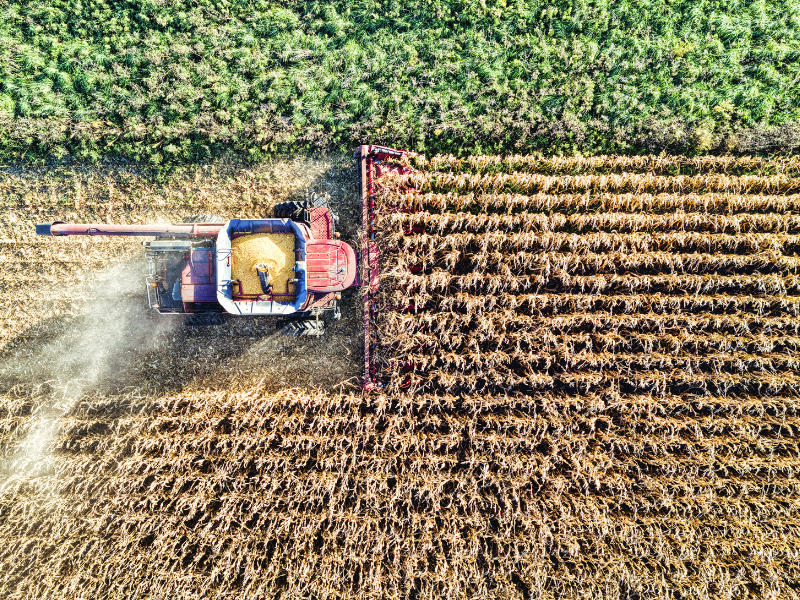
- Production and processing – Primary production activities such as farming, fishing as well as the processing of raw inputs into ready-to-eat foods or ingredients for further processing
- Transportation and distribution – Food distribution to retailers, and how transportation, logistics, wholesaling and distribution may influence competition within the food supply chain
- Retail pricing – Practices that may affect the prices, quantity or quality of products that consumers buy at retail such as loyalty programs, algorithmic pricing, “shrinkflation” and “skimpflation”
The Bureau’s announcement was foreshadowed by Prime Minister Carney’s launch of a National Food Security Strategy earlier this month, which seeks to increase competitive choice for Canadians, and includes increased funding for the Competition Bureau to investigate and pursue those engaged in anti-competitive business practices.
On June 2, 2026, Interim Commissioner of Competition Jeanne Pratt also signaled that the food and agriculture industries are a priority for competition law monitoring and enforcement. She stated to the House of Commons Standing Committee on Agriculture and Agri-Food:
We anticipate that the Bureau will dedicate a significant proportion of its resources to examining competition issues in this sector.
Merger reviews
In addition to the Bureau’s informal market study, one area of focus in the food and agricultural space in the foreseeable future is likely to be merger review, where the Bureau may closely scrutinize notifiable transactions and may even be on the lookout for non-notifiable transactions, which can be reviewed pre- or post-closing. Increased scrutiny of mergers in the Canadian food and agriculture industries is not entirely new, as reflected by the Bureau’s recent enforcement activity. The Bureau has sought merger remedies through litigation and a consent agreement in the grain handling industry in recent years.
What is new, however, is the Bureau’s increasingly narrow focus on market definition. The 2024 amendments to the Competition Act create a reverse onus on merging parties to prove their merger is not anti-competitive if their combined market share or market concentration changes above set thresholds. This has added to both the amount of information required to be produced and the length of the reviews in complex cases where the parties’ shares or concentration approach – or exceed – the relevant thresholds.
It is more important than ever for merging parties in the food and agriculture space to prepare early to demonstrate why their transaction will not harm competition, prepare for extended reviews and voluminous requests for information and, where appropriate, consider potential remedies.
Conduct investigations
In addition to the Bureau’s ongoing conduct inquiries and recent market study in the grocery industry, the Bureau pursued a formal investigation into alleged anti-competitive conduct in Western Canada by certain wholesalers and manufacturers of crop inputs. That investigation centered on whether certain wholesalers and manufacturers of crop inputs engaged in conduct contrary to the Competition Act by disadvantaging, restricting or blocking the supply of crop inputs to Farmers Business Network Canada Inc.
The Bureau concluded its investigation without any findings of wrongdoing; however, the regulator made sure to announce that it would continue to monitor the crop input industry for any anti-competitive conduct that seeks to restrict new entrants and has the potential to substantially lessen or prevent competition in any relevant market.
Agribusinesses in the antitrust hotseat in the U.S.
On May 20, 2026, the United States Department of Justice Antitrust Division (U.S. DOJ) announced that it had secured commitments from Bayer CropScience LLC in connection with the company’s loyalty program.
As part of the U.S. DOJ’s ongoing investigation into potential exclusionary conduct in corn and soybean seed markets, Bayer made commitments to remove and/or not reinstate certain provisions in its Premier Performance Program. Bayer is one of the largest seed companies in the world.
Bayer agreed to remove incentives that the U.S. DOJ alleged had the effect of discouraging independent seed companies from licensing technology from Bayer’s competitors. In response to the U.S. DOJ’s concerns, Bayer committed to not reinstating these incentives, or any substantially similar incentive program, for seven years.
The U.S. DOJ also had concerns with provisions in Bayer’s loyalty program that required independent seed companies to meet certain sales targets for both corn and soybeans to qualify for loyalty program discounts. The U.S. DOJ was concerned that Bayer was tying corn seed and soybean seed through these types of provisions, contrary to antitrust law. Bayer had already removed the tie between corn seed and soybean seed for the 2025 planting year; however, Bayer committed not to reinstate any such ties for seven years.
Notably, Bayer made the above commitments on a voluntary basis and not as the result of a consent decree or court order.
Ongoing U.S. DOJ seed industry investigation and private litigation
The precise start date of the U.S. DOJ’s ongoing investigation, its targets (other than Bayer), and its exact scope have not been publicly disclosed; however, it likely emerged from the Trump administration’s recent antitrust focus on the food supply chain. For example:
- In September 2025, the U.S. DOJ and the U.S. Department of Agriculture signed a Memorandum of Understanding to protect competition in key agricultural markets including feed, fertilizer, fuel, seed, equipment and other essential goods.
- On December 6, 2025, the President issued an Executive Order directing a broad investigation into alleged price-fixing and other anti-competitive conduct across the U.S. food supply chain. The Order requires the U.S. DOJ and its sister agency, the Federal Trade Commission, to each establish a “Food Supply Chain Security Task Force” and to take such actions as necessary to remedy any anticompetitive behaviour that their respective investigations detect.
- On May 11, 2026, the U.S. DOJ filed a statement of interest intervening in a civil matter between Corteva Agriscience LLC v. Inari Agriculture Inc.; the statement emphasized the importance of follow-on innovation and competition in the seeds industry.
As reflected above, enforcement in agriculture is a top priority for the U.S. DOJ at the moment.
While Bayer managed to satisfy the U.S. antitrust agency with relatively light, informal commitments (i.e. no formal consent decree or court order), it is now being sued by Latham Quality, an independent seed company, for allegedly using illegal and anti-competitive practices to monopolize the U.S. market for genetically engineered corn seeds, reaping “hundreds of millions, if not billions, of ill-gotten dollars.” The civil lawsuit, which was filed in April and made public in late May, proposes a class action and seeks an injunction along with treble damages against Bayer.
We invite agribusinesses to consult with the MLT Aikins Competition/Antitrust, Foreign Investment and Trade Law team, who work closely with our Agribusiness and Food group. We have extensive experience, deep technical knowledge and a true awareness of the emerging issues, challenges and opportunities in this sector and in competition law.
Please reach out if your business wishes to participate in the Competition Bureau’s examination into food supply chain over the next several weeks. The deadline for written submissions is July 31, 2026.
This article was prepared with the assistance of summer students Chan-Min Roh and Elle Boyko.
Note: This article is of a general nature only and is not exhaustive of all possible legal rights or remedies. In addition, laws may change over time and should be interpreted only in the context of particular circumstances such that these materials are not intended to be relied upon or taken as legal advice or opinion. Readers should consult a legal professional for specific advice in any particular situation.
Share
Related Insights
Frozen vegetable deal set to be iced by Competition Bureau