The state of nuclear energy in Canada: A new path emerges




As the global energy transition accelerates, nuclear energy is once again taking centre stage – especially in Canada. In this Insight, we explore how Canada is positioning itself as a leader in next-generation nuclear innovation and what that means for the country’s energy future.
On November 2025, MLT Aikins LLP co-published a report “Delivering the Future of Nuclear in Western Canada” with the University of Calgary and International Nuclear Law Association. Over the coming months, we will be publishing articles, such as this one, to highlight content set out in that report. The full report is available for free download now.
Nuclear energy is rapidly re-emerging as a vital tool for the future, as nations across the globe confront increasing energy demands and the need to decrease the emissions intensity of their energy supply chains. With increasing focus on clean, reliable and scalable energy options, the nuclear sector is gaining renewed relevance.
In this new era, Canada is uniquely positioned to lead. Long known as a global nuclear energy superpower, Canada has a storied history as both an early adopter and exporter of traditional reactor technologies, as well as a leading supplier of uranium. Today, it is stepping into a far more prominent role, embracing innovation, advancing next-generation technologies and forging a new nuclear path.
Small but mighty
In 2018, Canada signaled its intent to lead in the development of small modular reactors (SMRs) with the publication of A Call to Action: A Canadian Roadmap for Small Modular Reactors. Since then, we’ve seen unprecedented momentum.
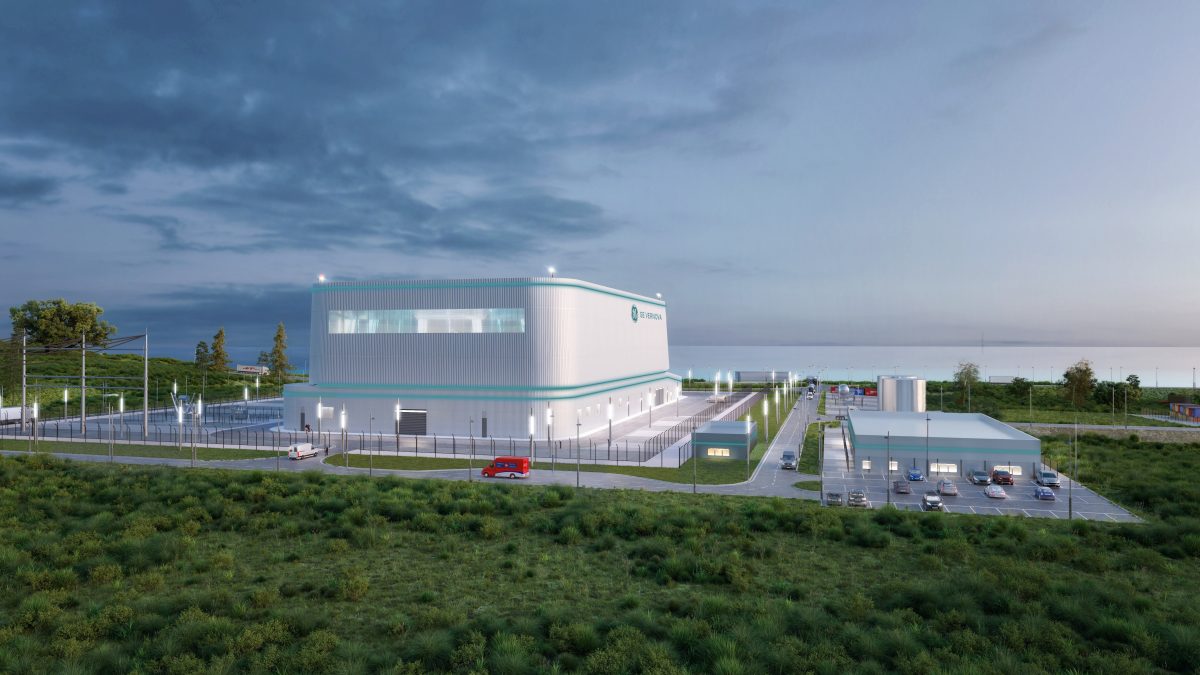
Saskatchewan, Ontario, New Brunswick and Alberta have all signed on to an interprovincial plan for SMR development. In 2021, Ontario Power Generation (OPG) selected GE Hitachi’s BWRX-300 design for deployment at the Darlington New Nuclear Project. Once built, the Darlington project is anticipated to be the first SMR in the G7.
In October 2025, the Federal Government announced it would provide $2 billion in funding for the Darlington New Nuclear Project through the Canada Growth Fund and the Province of Ontario announced it would invest $1 billion through the Building Ontario Fund.
With an estimated budget of $20.9 billion, the Darlington SMR project is not just a milestone for Canada – it is being watched around the world. The deployment of four SMRs will generate 1,200 MW of electricity, powering more than a million homes with clean, reliable energy and demonstrating the scalability and viability of new nuclear technologies. The Canadian Nuclear Safety Commission (CNSC) announced on April 4, 2025, its decision to issue a licence to construct for the first Darlington reactor.
In Saskatchewan, work is also underway to bring nuclear power online. SaskPower is in the planning and assessment stages for the potential use of the BWRX-300 design as part of a deployment of an SMR generation facility near Estevan, Saskatchewan. SaskPower has also created a new subsidiary, SaskNuclear Inc., to lead regulatory and business development for the potential deployment of nuclear power in Saskatchewan. These activities support the Saskatchewan First Energy Security Strategy announced by the Government of Saskatchewan in October 2025, which contemplates a transition to future nuclear power generation leveraging both SMR and large-scale reactor technologies.
Alberta has recently kicked off its own public and industry consultation process to determine how nuclear energy can be integrated into Alberta’s current energy mix. An expert panel is expected to issue a final report to Alberta’s Minister of Affordability and Utilities by March 31, 2026, setting out the results of the consultation. On November 27, 2025, the governments of Canada and Alberta signed a Memorandum of Understanding with plans to develop and implement policy frameworks for the advancement of nuclear in Alberta. Project proponents are already beginning early-stage development work for nuclear projects in Alberta, such as Energy Alberta’s Peace River Nuclear Power Project.
Fuel for the future
Canada’s strength in nuclear energy generation has always been built on and supported by its rich uranium resources, which are increasing in importance as nations begin to consider new nuclear opportunities. In 2023, OPG signed fuel supply agreements with Cameco, Urenco USA, Orano and Global Nuclear Fuel-Americas to power the Darlington SMRs. These multi-jurisdictional supply chains agreements link Saskatchewan uranium to international enrichment and fabrication, reinforcing Canada’s role as both a supplier and strategic partner in the global nuclear ecosystem.
SaskPower has similarly entered into agreements that aim to support the development of a Saskatchewan-based nuclear fuel supply chain, building on the longstanding industry in Western Canada that could serve both domestic and international needs.
Economic opportunity
The global market for SMRs is projected to be worth between $150 and $300 billion by 2040, according to Natural Resources Canada. With this growth comes economic opportunity – especially for regions investing early.
A 2020 study by the Conference Board of Canada estimates that a single SMR project could support thousands of jobs across its lifecycle, including:
- 700 jobs during project development
- 1,600 during construction
- 200 during operations
- 160 during decommissioning
In Ontario alone, the construction and operation of four SMRs is expected to boost GDP by $13.7 billion and support approximately 2,000 jobs per year.
Looking ahead and looking West
While Canada is making significant strides, challenges remain. SMR designs, while promising, are still in a developmental stage. Licensing, public engagement, Indigenous consultations, fuel supply and waste management are all critical components of success that require co-ordinated planning, strong partnerships and regulatory foresight.
The path ahead will be neither quick nor easy – but Canada’s position is strong. Nuclear has been a part of Eastern Canada’s energy mix for decades and is being established as a continued energy source for decades to come.
Western Canada is particularly well-positioned to capitalize on new nuclear opportunities. Western Canadian provinces have traditionally been powered by coal and gas. While renewable energy continues to be relied on, Western Canadian provinces are also looking to nuclear energy as being able to provide reliable, low-emitting, baseload power able to meet growing energy demands. At the same time, Western Canada’s well-established uranium industry continues to thrive and is poised to capitalize on new opportunities driven by new nuclear developments being prospected around the world.
The decisions Canada makes now – on policy, investment, engagement and regulatory modernization – will shape not only our future energy mix but also our contribution to global industrial decarbonization for decades to come. This is a moment of national and international significance. The world is watching Canada as it continues to take on a leadership role in the advancement of new nuclear technologies.
Learn more about the development of SMRs and the legal and policy issues underpinning Canada’s nuclear future in our report Delivering the Future of Nuclear in Western Canada, available here for free download.
Note: This article is of a general nature only and is not exhaustive of all possible legal rights or remedies. In addition, laws may change over time and should be interpreted only in the context of particular circumstances such that these materials are not intended to be relied upon or taken as legal advice or opinion. Readers should consult a legal professional for specific advice in any particular situation.
Share
Related Insights

Impact Assessment Act found to be mostly unconstitutional

Are You Developing New Carbon Capture Technologies? You Could Be Eligible for Funding