Frozen vegetable deal set to be iced by Competition Bureau



Authors: Joshua Krane, Geoff Schneider, Kyle Donnelly, Kayla Míguez
This past June we wrote about the implications for agribusinesses resulting from the Canadian Competition Bureau’s declared intention to scrutinize the agricultural and food sector for anti-competitive conduct.
In this article, we provide an update on the latest developments that occurred over the space of a week in August, including the Bureau’s recent attempt to block a merger in the food sector, and a private lawsuit brought by a Montreal butcher shop against another food industry participant filed under the new expanded private right of action regime of the Competition Act.
We also provide an update on the Bureau’s recent submission to the Canadian Food Inspection Agency (CFIA)’s consultation on facilitating the interprovincial trade of red meat.
Takeaways
- Irreparable harm: The Bureau has brought an interim injunction to prevent parties involved in a merger of two leading canned and frozen food distributors from closing pending the Tribunal’s ruling, arguing that allowing the transaction to close would cause irreparable harm to competition. This is the first such injunction filed with the Tribunal since the Competition Act was amended in 2023.The Bureau received some scrutiny earlier in 2026 in connection with its recent merger challenge against Keyera Corp. et al. where it did not seek an injunction to block closing. However, the difference in the Bureau’s approach in this case may be nothing more than the Bureau having a better hand, particularly with respect to the irreparable harm prong of the interim injunction test, and/or being more willing to take on litigation risk given the nature of the industry.
- Merger reviews: Agribusinesses should take note that when considering a potential transaction that involves an increase in market share or concentration over the structural presumption, a long review process should be expected. The Bureau’s review in the case being litigated lasted nearly 10 months.
- Food affordability: The Bureau called out food affordability explicitly in its applications and news release regarding this merger challenge.
1. Merger challenge in the canned and frozen vegetables space
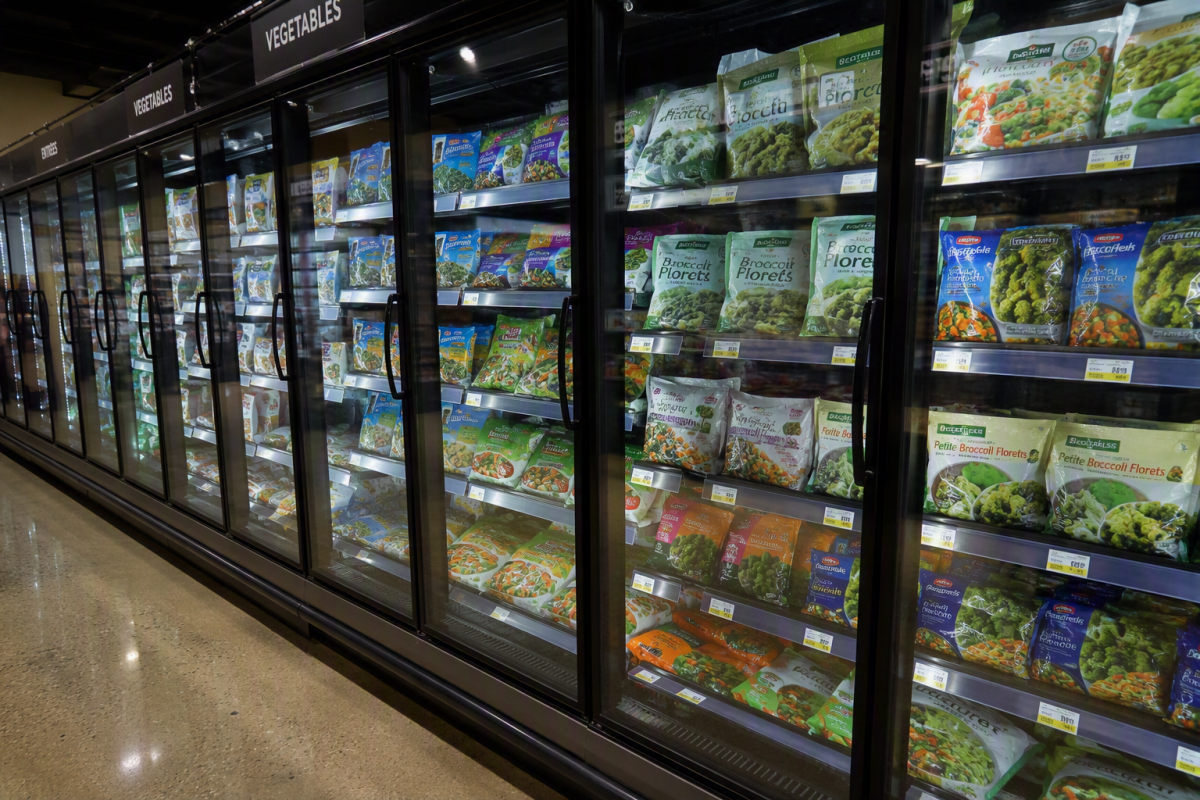
On August 18, 2026, the Bureau filed an application with the Competition Tribunal to block Nortera Foods Inc. (“Nortera”) from acquiring B&G Foods Canada, ULC’s (“B&G”) Green Giant and Le Sieur brands. It also asked the Tribunal for an interim injunction to prevent the parties from closing pending the Tribunal’s ruling on the merits.
Both Nortera and B&G market and sell canned and frozen vegetables in Canada under nationally recognized brands. While Nortera processes these vegetables, B&G does not own any processing facilities in Canada. When Nortera announced the merger, it promoted the benefits of Canadian ownership of these national brands along with the more general benefits to Canada and Canadians that may flow from the deal.
Market definition
The Bureau alleges that the proposed transaction would combine Canada’s major national brands of canned and frozen vegetables under one owner. The Bureau excluded fresh vegetables from the relevant product markets, noting that fresh vegetables have different physical characteristics, shelf life and storage requirements, are procured and merchandised separately from canned and frozen vegetables and are generally not seen by consumers as a close substitute.
That said, the Bureau conceded that branded and private label vegetables belong to the same product market, writing in its application that “the products compete closely at the retail level.” This concession may indicate the Bureau feels confident in its characterization of each of the various canned and frozen vegetables as separate product markets. It will be worthwhile to follow whether the Tribunal agrees with the Bureau on its characterization or whether it will consider fresh vegetables within the relevant markets.
Substantial lessening of competition
The Bureau pointed to evidence of high market share and industry concentration to assert that the transaction is presumptively unlawful, thereby shifting the burden of proof onto the merging parties to demonstrate otherwise. In its application, the Bureau focused on the combined market share, high barriers to entry and insufficient countervailing power of smaller grocers.
Specifically, the Bureau noted that small and medium-sized northern and remote retailers tend to rely more heavily on branded products as they generally lack the scale required to develop and maintain private label products. This makes them more vulnerable to the competitive effects of the transaction.
The Bureau also noted that the evidence it collected during the review showed high barriers to entry. The crux of the Bureau’s position regarding entry/expansion is that brand awareness is a powerful barrier, arguing that heavy marketing and advertising investments would be essential for a supplier to compete effectively against Nortera’s brands. This argument seems somewhat contradictory with the Bureau’s assessment of market definition, which concedes that private label and branded products are in the same product market.
The Bureau also proposes that to be an effective competitor at the wholesale level requires securing processing capacity and reliable sources of supply. Given that B&G currently uses Nortera for its processing needs, the foreclosure effects of the proposed transaction are not obvious. In other words, the proposed transaction does little to change the status quo as between Nortera and B&G; however, it may be that Nortera will have an incentive and ability to foreclose smaller wholesale rivals post-transaction once it has acquired and consolidated the B&G brands.
2. Private action in the kosher meats space
On August 13, 2026, Aleph Meats Inc. (“Aleph Meats”) filed an application with the Tribunal seeking permission to bring a proposed application against the Jewish Community Council of Montreal (commonly known as “MK Kosher”).
MK Kosher is an organization that provides a kosher certification (the “MK Kosher Certification”) for food sold in Canada and abroad. Aleph Meats operates a butcher shop in the Greater Montreal area that specializes in kosher meats. Rather than using the MK Kosher Certification, Aleph Meats chooses to have its products certified by an alternate certification authority.
Aleph Meats alleges that MK Kosher impedes competition in the relevant Canadian market by using mandatory exclusivity clauses to prevent third parties – such as grocery stores, caterers, slaughterhouses and event venues – from purchasing kosher products from any suppliers using a certification other than its own. As a result of these anti-competitive behaviours, Aleph Meats claims it cannot sell its kosher products to many of these third parties serving the Jewish community in the Greater Montreal area, depriving consumers of competitive prices as well as a range of kosher product choices.
In its proposed application, Aleph Meats asks the Tribunal to prohibit MK Kosher from engaging in these anti-competitive practices. More specifically, it requests that MK Kosher be ordered to remove all formal and informal contractual barriers to competition with third parties, permitting these parties to do business with kosher product suppliers using other certifications. It also asks the Tribunal to issue an interim order to this effect until the Tribunal rules on the merits of the proposed application.
Obtaining leave or authorization from the Tribunal has proven to be quite challenging for private applicants as the Tribunal has held applicants to a high standard.
3. Regulatory intervention on reducing barriers to interprovincial trade of red meat
Beyond these enforcement activities, the Bureau has also been active on the regulatory front as part of its declared intention to examine competition across Canada’s food supply chain.
The Bureau recently made a submission to the CFIA expressing its support of proposed amendments to the Safe Food for Canadians Regulations (SFCR) aimed at facilitating the interprovincial trade of red meat. Currently, for meat to move across provincial borders, it must be processed in a Federally licensed slaughter establishment. Meat produced in a slaughter establishment under Provincial oversight cannot be traded or exported interprovincially. The proposed amendments would create a targeted, time-limited exemption from these internal trade requirements. If a province identifies unmet slaughter capacity, livestock producers would be able to use a provincially inspected slaughter establishment for processing, even if located in another province. The processed meat could then be transported back to the originating province for sale or could be sold in the province in which it was processed – provided the provinces involved enter into the required oversight agreement.
The Bureau supports reducing barriers to interprovincial trade as a means of promoting competition across the food supply chain and improving food affordability for Canadians. It describes the proposed exemption as “a promising and pragmatic response to current slaughter capacity constraints and interprovincial trade barriers.” That said, to promote sustainable competition and broader market access, the Bureau recommends long-term regulatory approaches may be necessary – especially for provincially licensed slaughter establishments that will not realistically be able to transition to a Federal license. For businesses acting in this sector, it will be worth monitoring the CFIA’s response to the Bureau’s submission to see whether more permanent regulatory reform is likely.
The MLT Aikins Competition/Antitrust, Investment and Trade team
The outcome of these applications could have important implications for how the Tribunal regulates commercial conduct and mergers in Canada’s food sector moving forward. We invite businesses acting in the food and agriculture sectors that are facing similar matters to consult with the MLT Aikins Competition/Antitrust, Investment and Trade team, who work closely with our Agribusiness and Food group. We have extensive experience, deep technical knowledge and a true awareness of the emerging issues, challenges and opportunities in these sectors as well as in competition law.
Note: This article is of a general nature only and is not exhaustive of all possible legal rights or remedies. In addition, laws may change over time and should be interpreted only in the context of particular circumstances such that these materials are not intended to be relied upon or taken as legal advice or opinion. Readers should consult a legal professional for specific advice in any particular situation.
Share
Related Insights


Can a contract be cancelled because of government tariffs?